The Rise of Anniversary Kits: From Rare Commemorations to Commercial Strategy
The football kit landscape has undergone a remarkable transformation over the past three decades. Where anniversary kits were once rare, meaningful commemorations worn throughout an entire season, they have evolved into a booming industry of special-edition releases that clubs produce with increasing frequency.
The Rise of One-Off Anniversary Kits - The Numbers
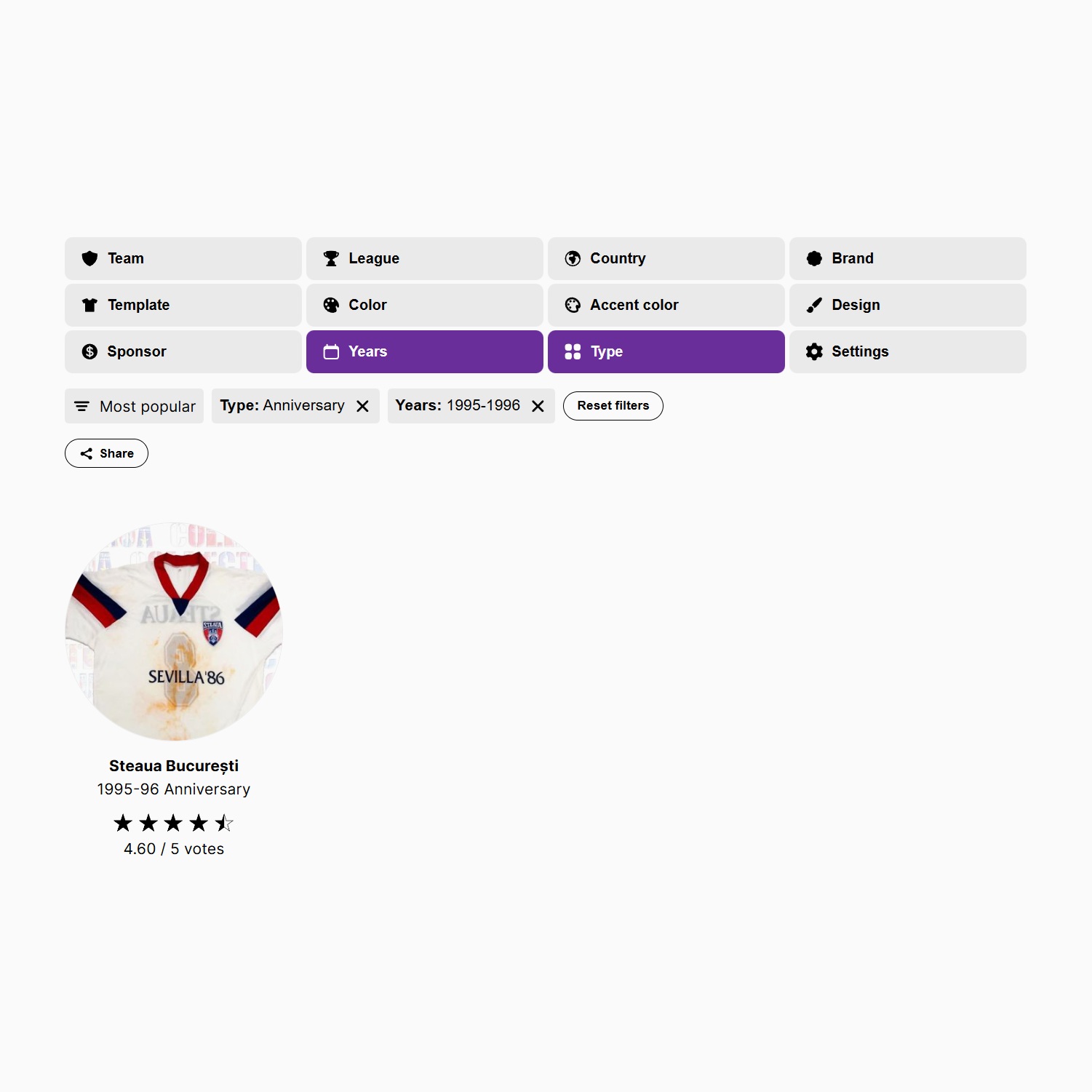
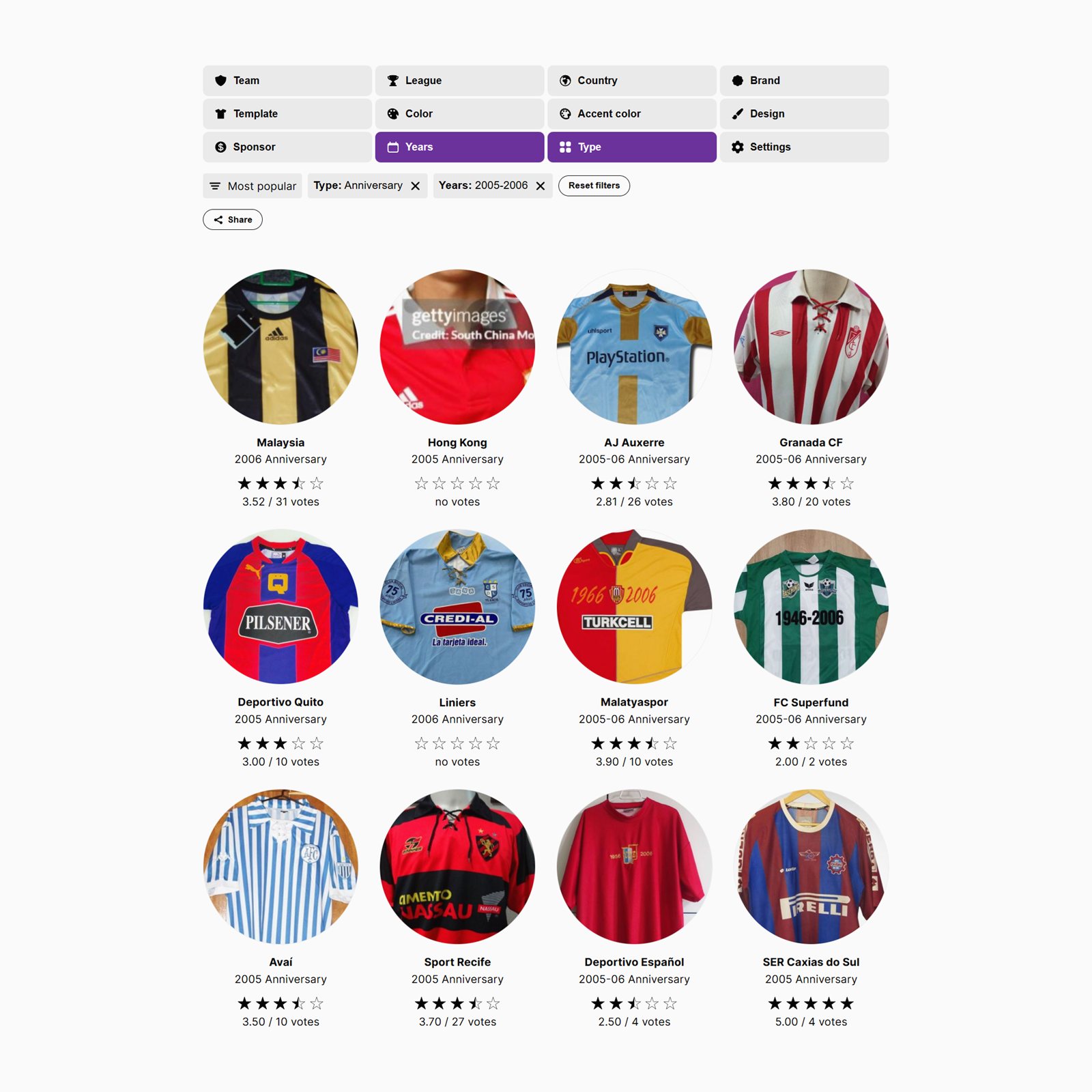
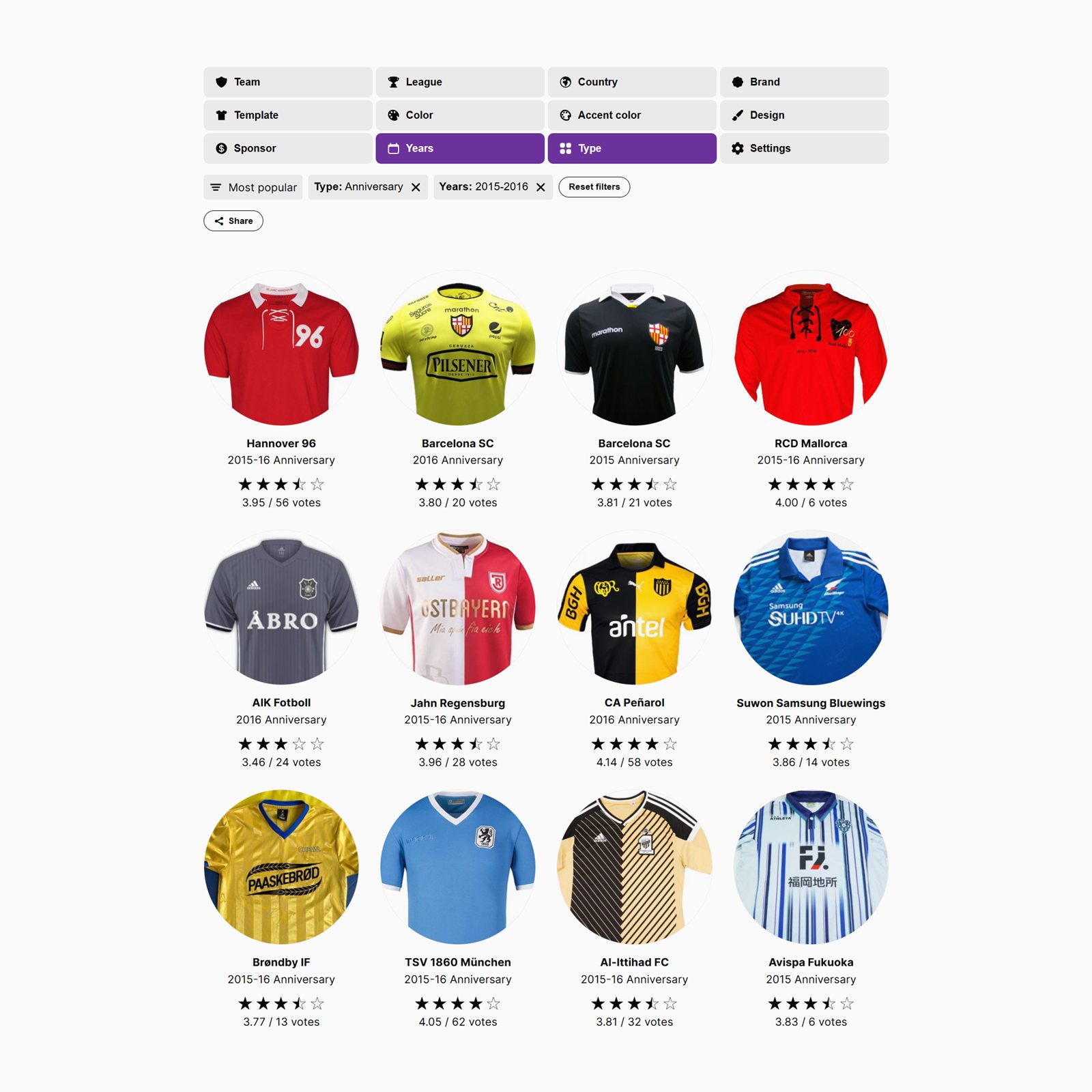
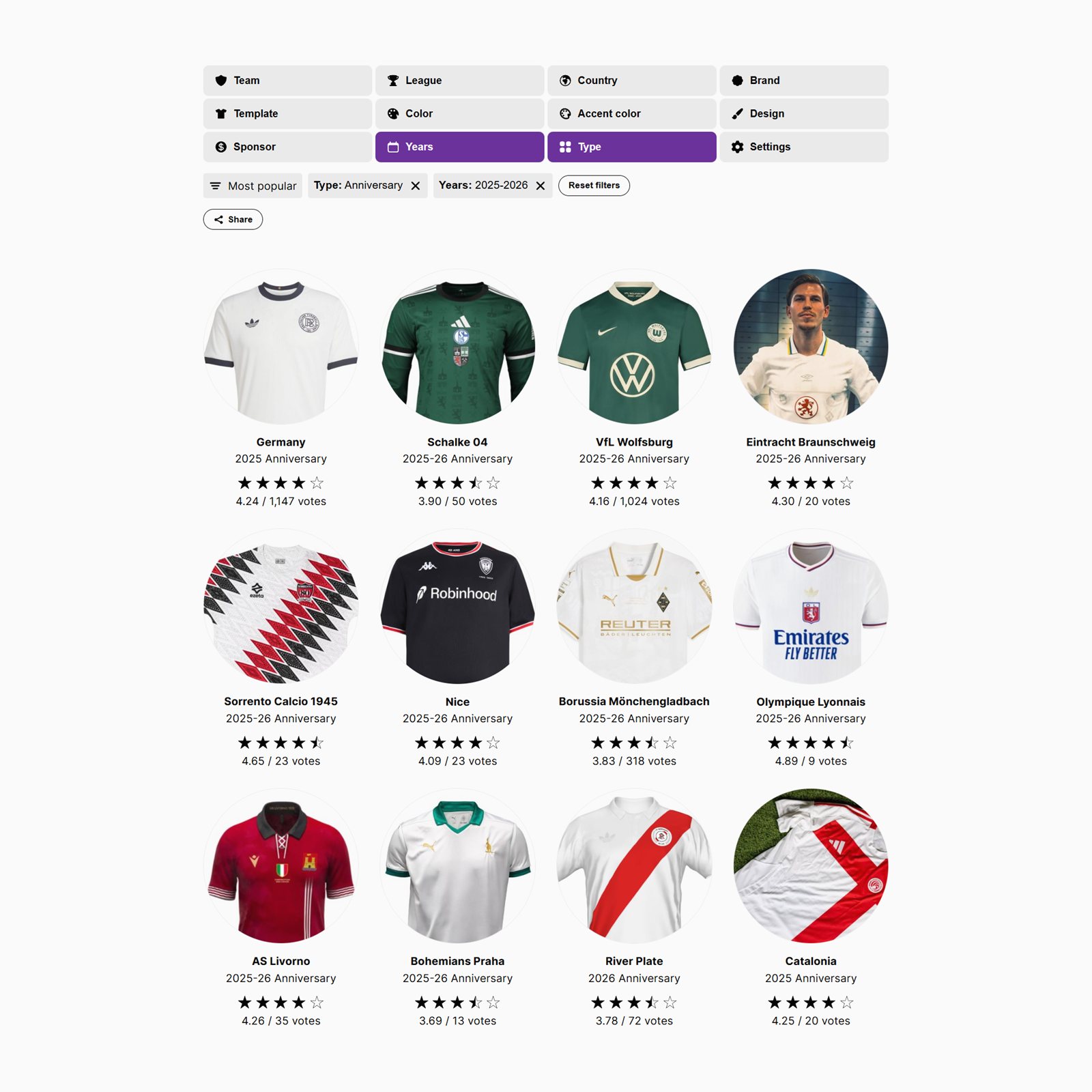
[The numbers about the frequency of special/one-off Anniversary Kits tell a striking story:: from just one anniversary kit in 1995-96, the count has exploded to 20 in 2005-06, 48 in 2015-16, and a staggering 232 in 2024-25 (as the 2025-26 season is not over yet, we take the previous one for better comparability).
The numbers are clear - more than double every 10 years. Now, let’s examine the reasons, historical context, the present situation, and the likely outcome
The Beginning - Anniversary Kits For Whole Seasons
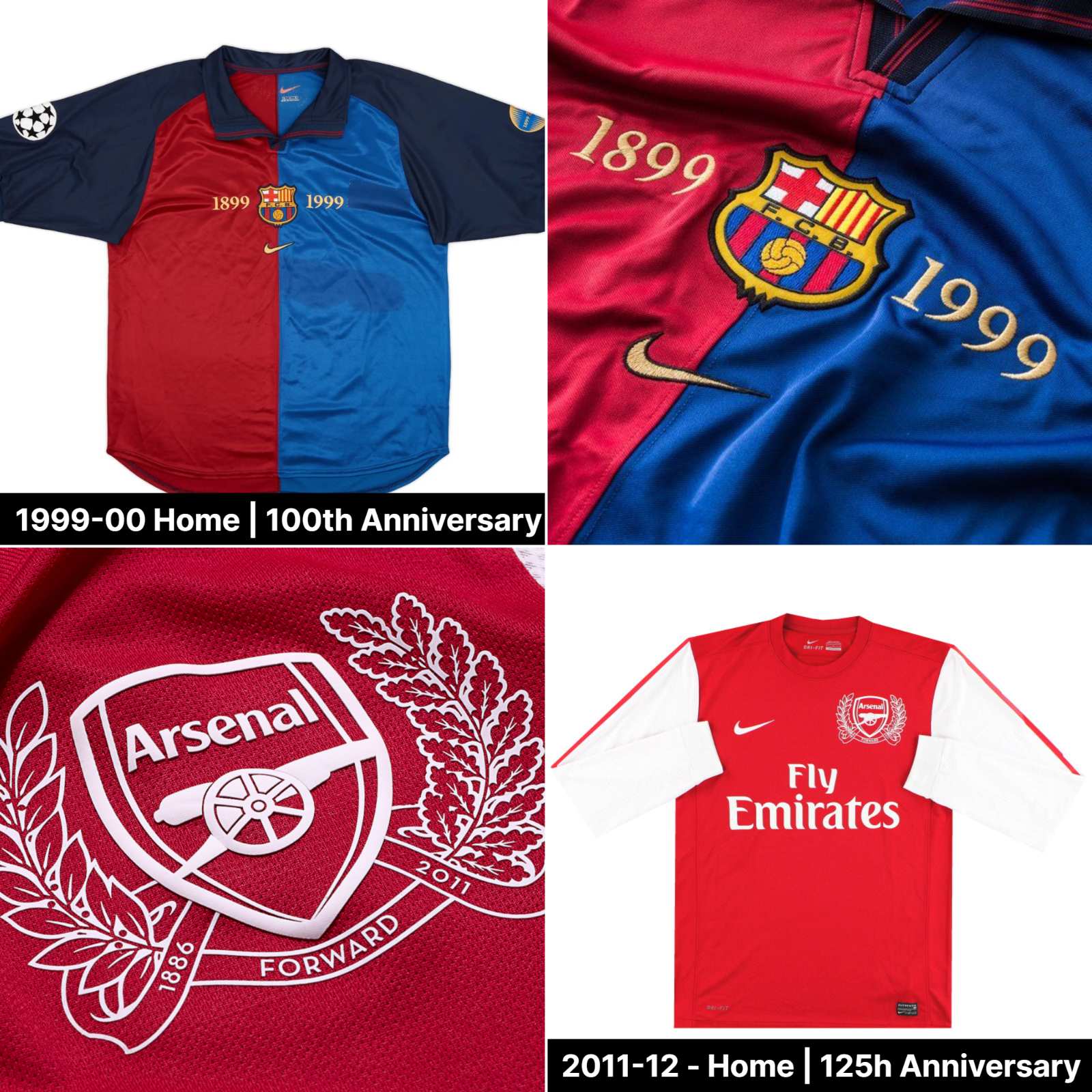
Before football kits became a commercial thing, there virtually existed no special kits. And while football kits have been marketed since the 1970s (in the beginning only for Kids), we first saw anniversary signs in the 1990s.
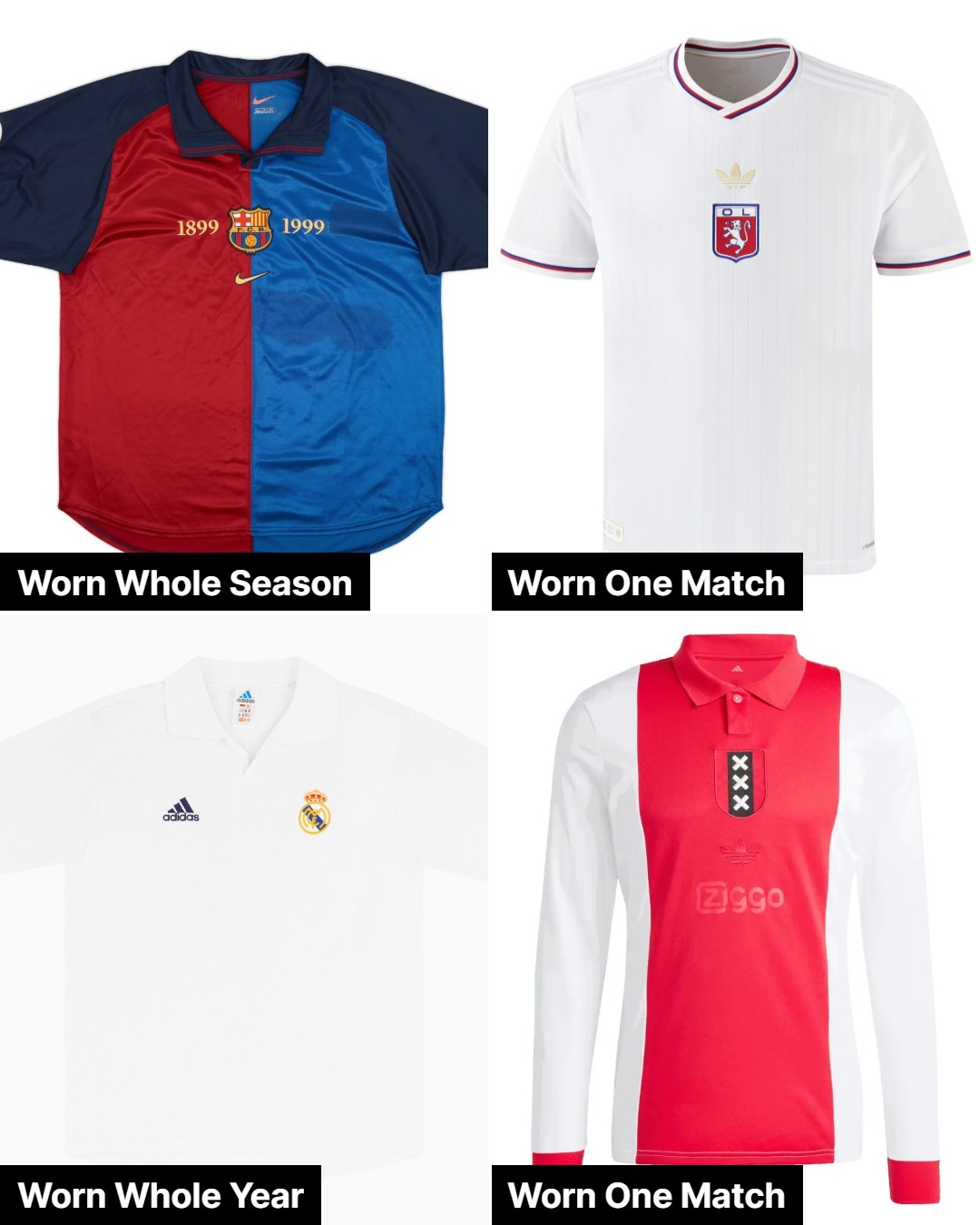
Less than 30 years ago, anniversary kits represented something fundamentally different from today's releases. When clubs marked significant milestones, they didn't simply add another kit to their collection - they made the anniversary/special design their primary strip for the entire campaign.
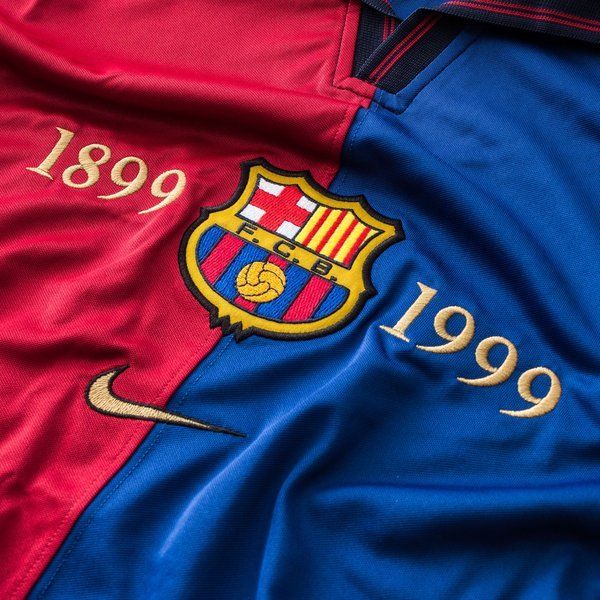
So, for example, Barcelona turned 100 years in 1999 - but they did not release a one-off anniversary kit. Instead, their regular 1999-00 home kit featured anniversary inscriptions & a design inspired by the first kit, and had been their home shirt for the whole 1999-00 season.
Meanwhile, Real Madrid's 2002 centenary year saw them wearing a simplistic white centenary home shirt for not one season, but actually in two different season - Real Madrid wore the kit from the start of 2002 until the end of the year, including the 2002 Champions League triumph.
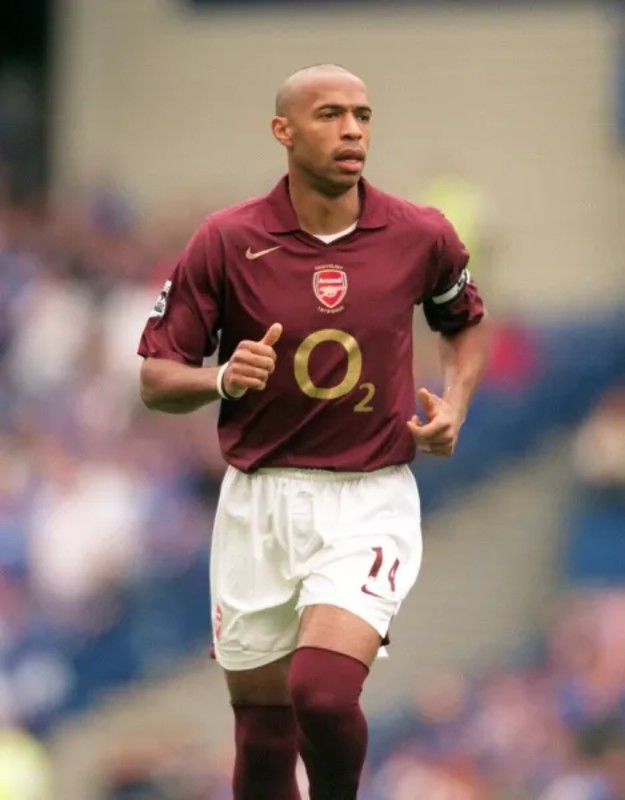
Arsenal's 2005-06 redcurrant & gold Highbury commemorative kit stands as another example of this approach, even though no typical anniversary kit. To mark their final season at Highbury after 93 years, the Gunners replaced their traditional red with a deep red shade, honoring the colors worn in their first season at the historic stadium in 1913. This wasn't a one-off novelty or a merchandising opportunity - it was the home kit, worn in every league match, every Champions League fixture, all the way to that heartbreaking final in Paris. The shirt, adorned with gold lettering and "Highbury 1913-2006" embroidery, became inseparable from that season's narrative: Thierry Henry's brilliance, the unbeaten run at their beloved ground, and the bittersweet farewell of the lost Champions League final.
The Modern Proliferation: Anniversary Kits as Additions
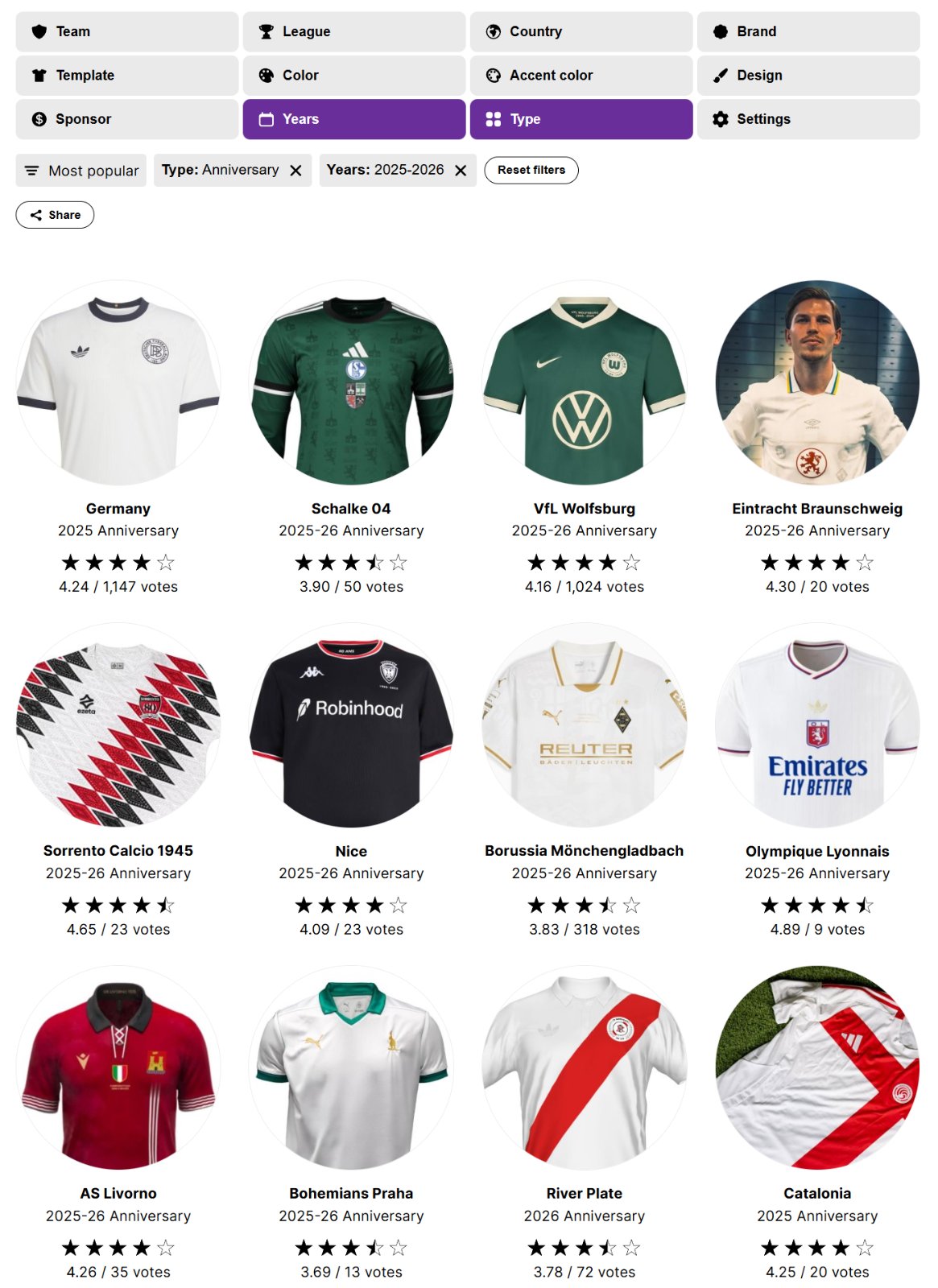
Today's anniversary kit landscape bears little resemblance to its predecessor. Rather than replacing the standard home kit, clubs now release anniversary designs as supplementary options - fourth kits, special editions, or one-match commemorations that exist alongside the traditional home, away, and third strips.
So, the last full season completed, the 2024-25 season, saw one-off anniversary releases from AC Milan (125th), Aston Villa (150th), Palmeiras (110th), Real Madrid and Marseille (both 120th), and countless others. Most were worn once, perhaps twice, before being archived as collector's items. Manchester City's 125th anniversary kit in 2019, limited to 1,894 individually numbered units, was worn only in the Community Shield.
Even when worn more frequently, these anniversary kits exist within a saturated market. The modern release calendar has transformed what was once a special occasion into routine practice, a quarterly drop schedule that treats football kits like streetwear collections.
The Commercial Logic: Why Clubs Can't Resist
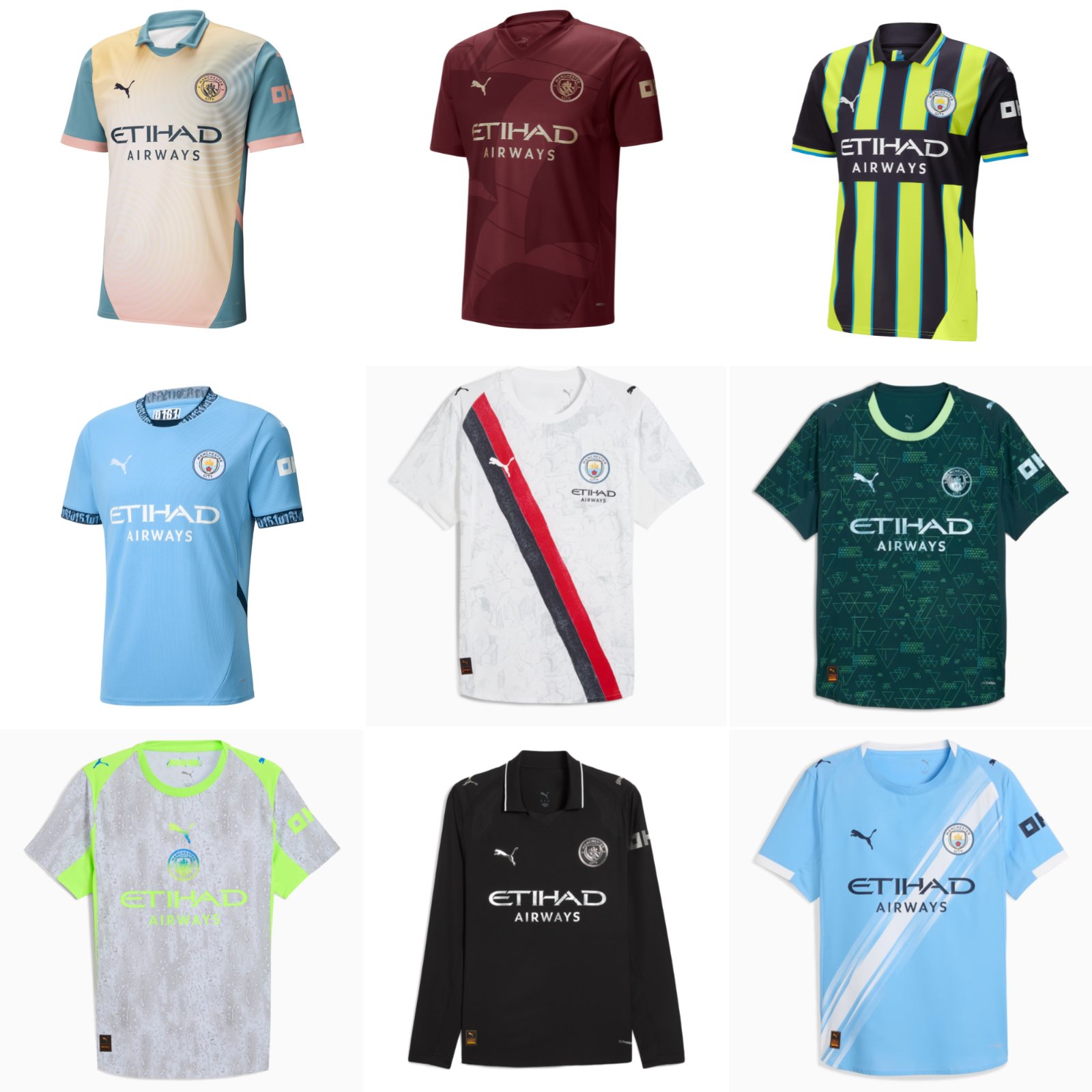
Manchester City wore nine different kits in the year of 2025.
The explosion in anniversary kits reflects football's evolution from sport to global entertainment business. The financial incentives are simply too substantial to ignore.
Kit deals have reached astronomical figures. Manchester United's partnership with Adidas is worth £750 million over ten years, while Nike pays Paris Saint-Germain approximately £80 million annually. The top clubs generate staggering revenues from merchandise. Barcelona leads European clubs with over £153 million in annual kit and merchandising revenue, followed closely by Real Madrid at £132 million and Manchester United in third. These figures combine manufacturer sponsorship payments with actual sales revenue, and the model depends on constant product turnover.
Anniversary kits offer particular commercial advantages. They often feature sponsorless designs or minimal branding, appealing to purists and collectors who prefer cleaner aesthetics.
The Case For: Choice, Sponsorless Designs and Revenue
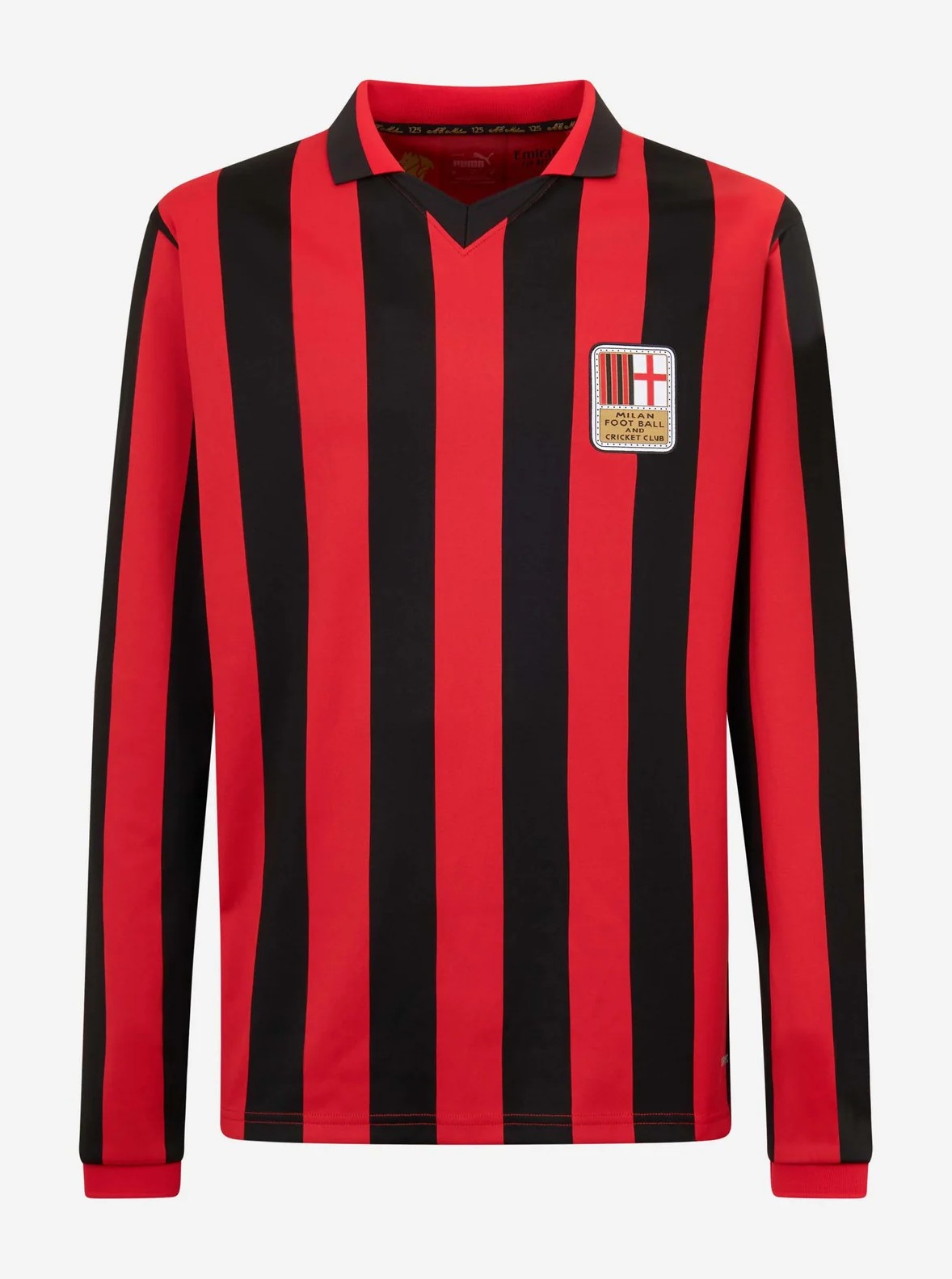
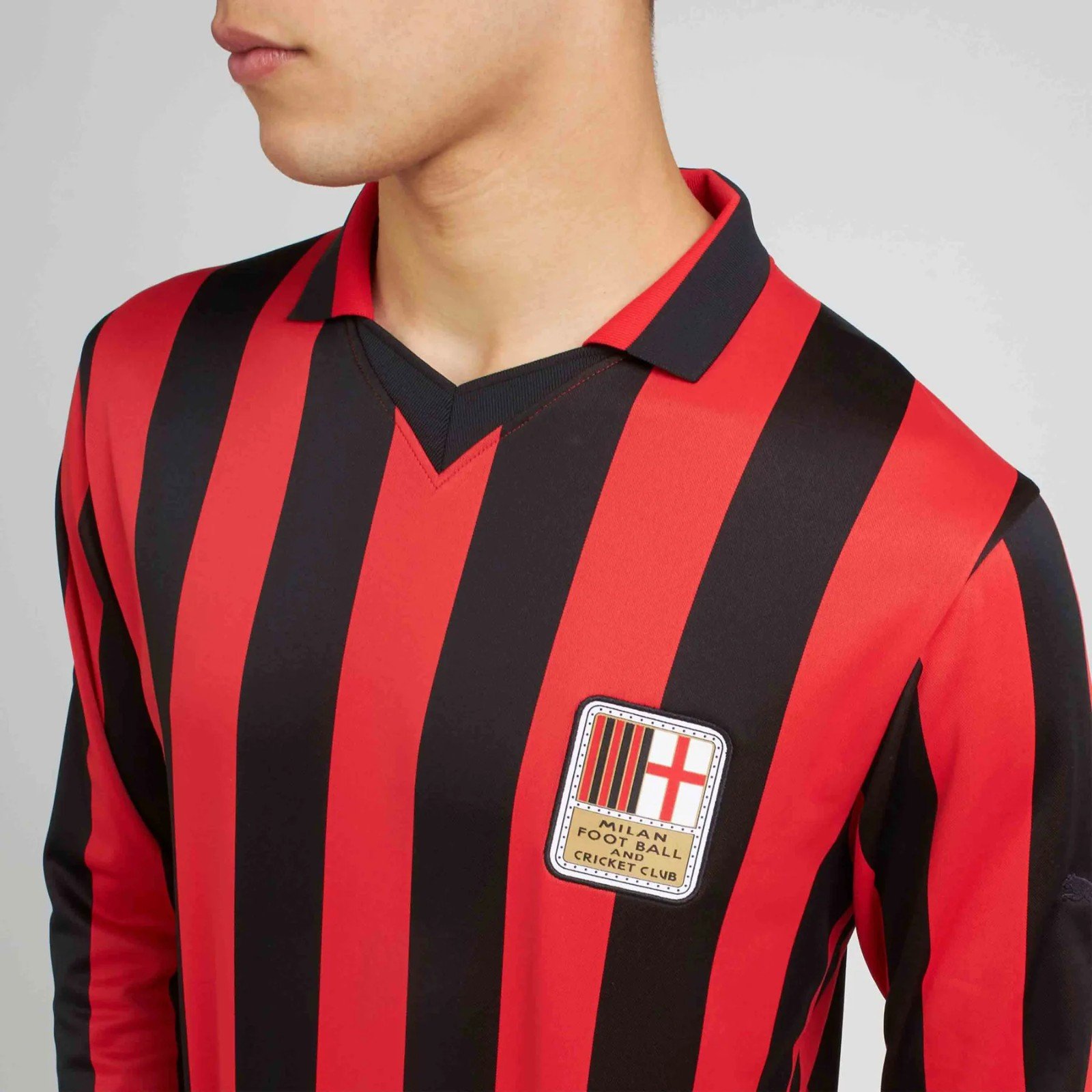
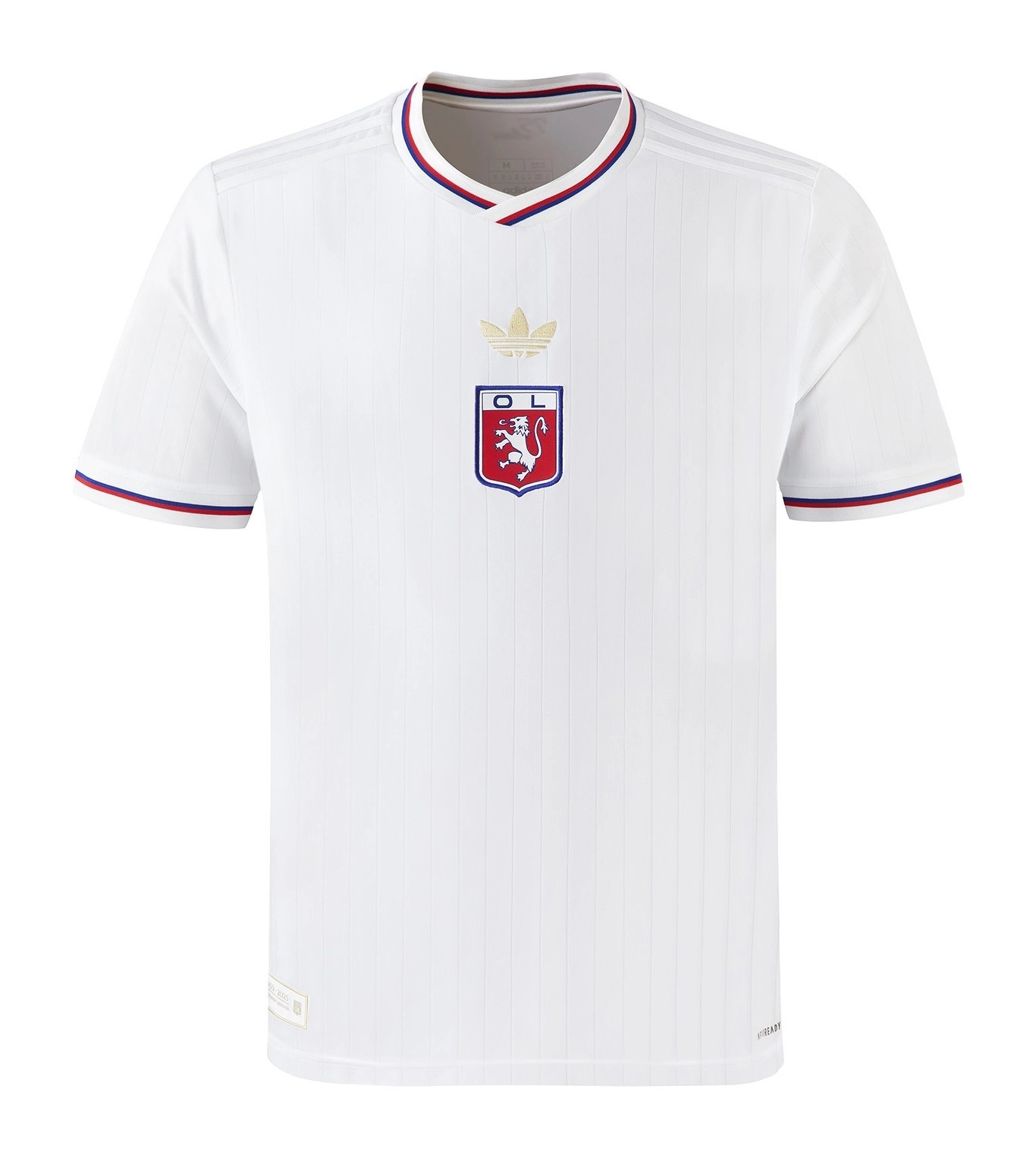
Supporters of the modern anniversary kit proliferation make several compelling arguments. The most obvious benefit is choice. In previous eras, if you disliked your club's kit design, you had limited alternatives. Now, with four, five, or even six options available, supporters can find something that suits their aesthetic preferences.

Sponsorless designs, frequently seen on anniversary kits, provide a refreshing aesthetic change. Juventus' 120th anniversary shirt in 2017, inspired by their 1950s designs, featured black and white stripes with a classic logo and without player names on the back. When brands agree to forgo visibility for a single match or limited release, purists celebrate the temporary return to simpler times.
Finally, the extra revenue made with more kits allows clubs to buy better players, which then in most times lead to better sporting success. And in contrast to the revenue streams of TV and stadium revenue, no fan is forced to buy a new kit (if you have children, the story might be different...).
The Case Against: Exploitation, Forgettability, and Excess
Anyone out there who remembers Manchester City's 125th anniversary kit? It was worn once only.
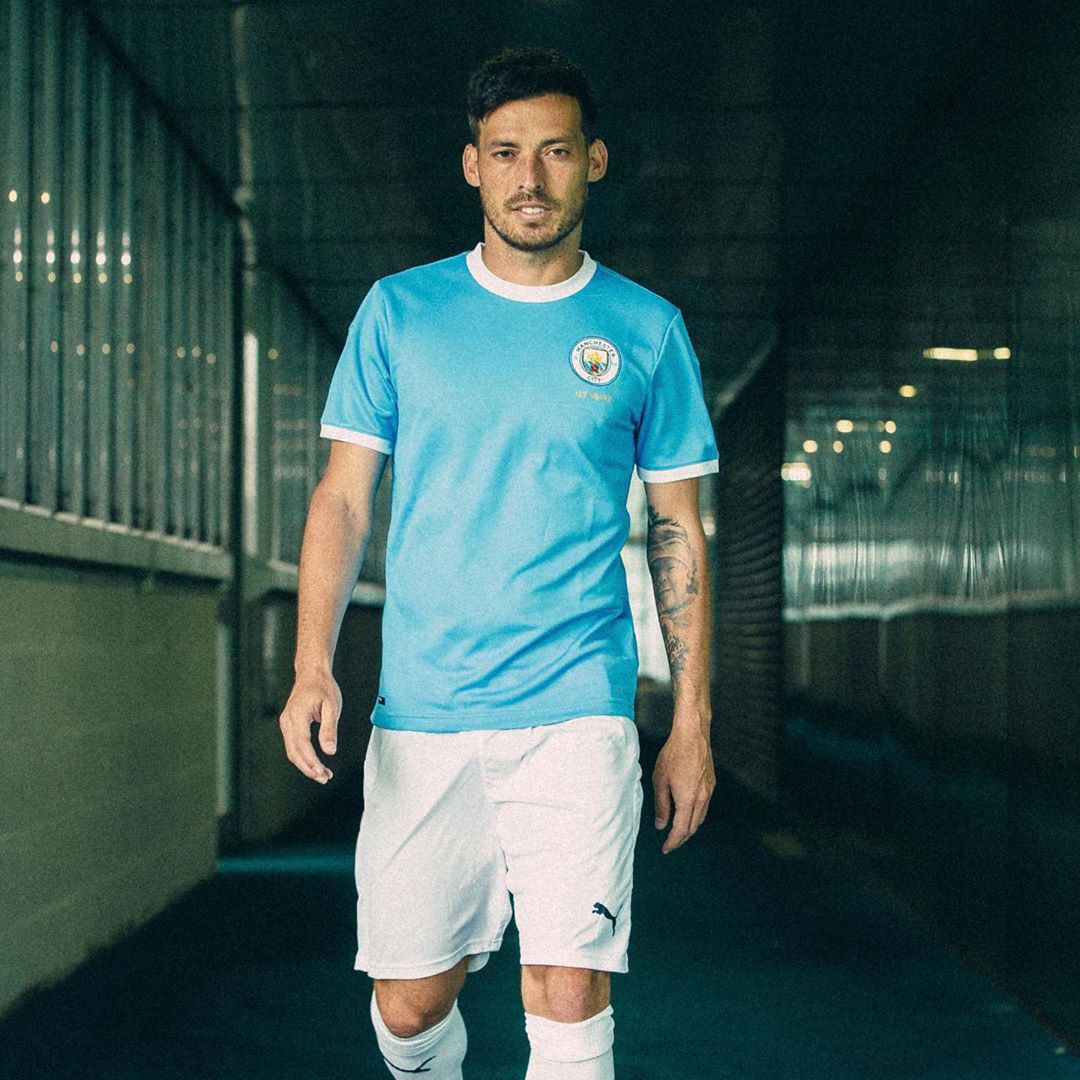
Critics, however, see the proliferation of anniversary kits as cynical commercialization that exploits supporter loyalty while diminishing the very meaning these shirts are supposed to convey.
The financial burden on supporters has become substantial. A family of four wanting to purchase matching kits faces costs of £200-400 for a single release. When clubs release five or six kits per season, keeping current becomes financially impossible for ordinary fans.
The environmental impact cannot be ignored. Football kits are polyester garments produced in global supply chains with significant carbon footprints. The industry's model of planned obsolescence generates enormous textile waste.
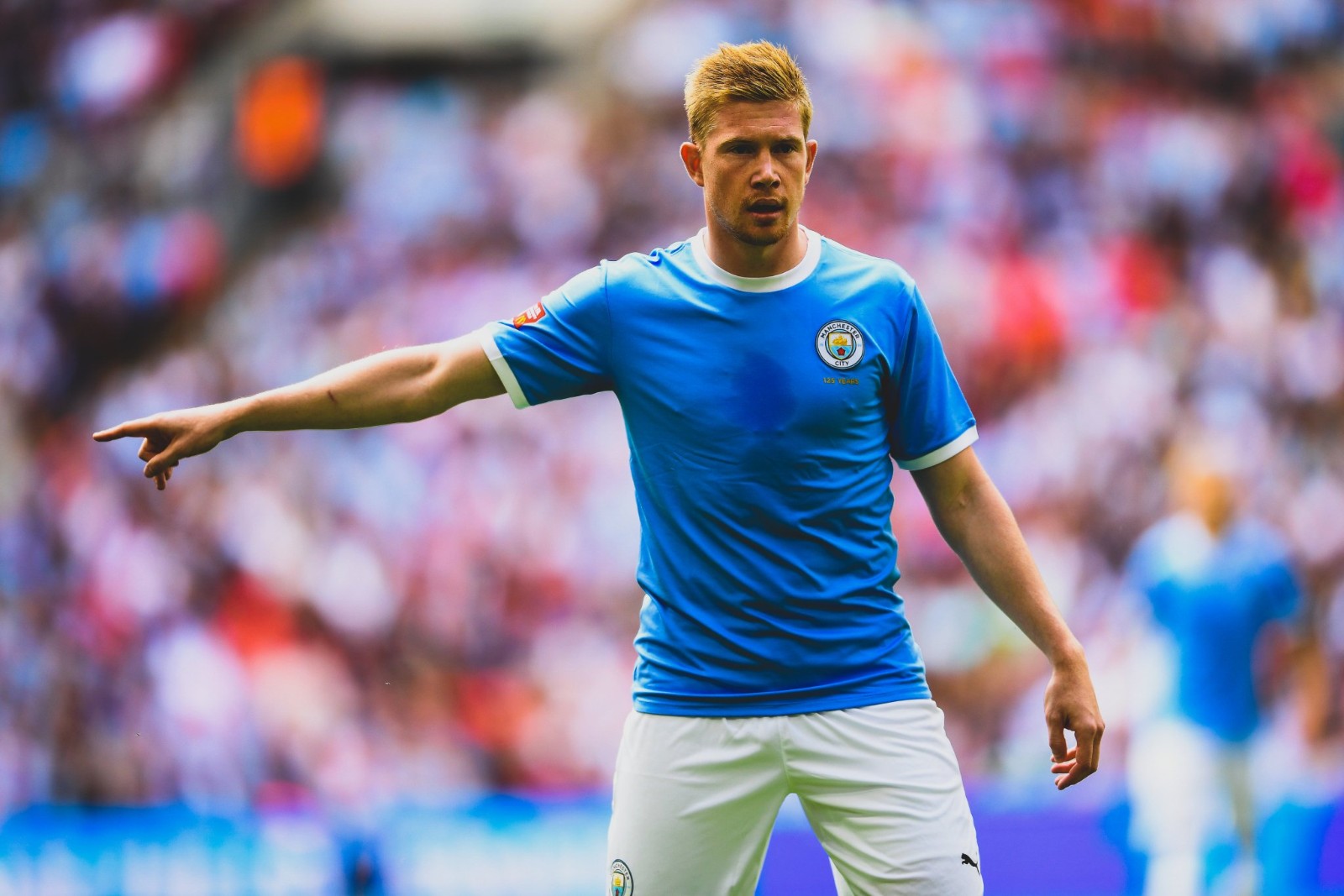
Perhaps most significantly, the proliferation has made anniversary kits forgettable. When Arsenal wore their redcurrant Highbury shirt throughout 2005-06, it became iconic precisely because of its ubiquity. Every significant moment of that season - the Champions League run, the Highbury farewell - was captured in those colours. The shirt and the season became inseparable in collective memory.
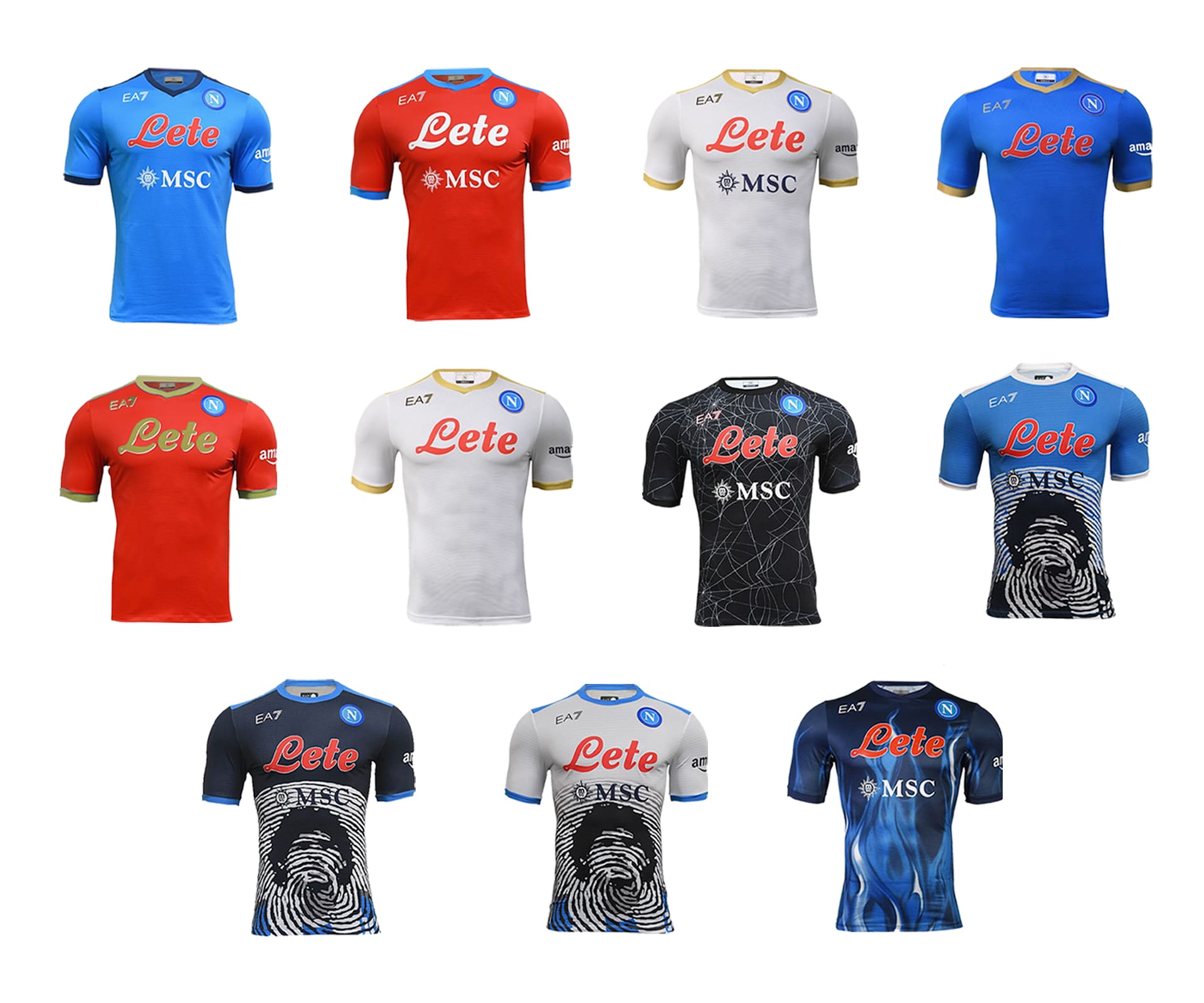 Napoli has released 11 kits in a single season
Compare this to modern releases worn once or twice. Who remembers the specific designs Manchester City wore for their various 2025 special occasions? When a club releases eight kits in a season, as Napoli did, which ones resonate? The abundance creates forgettability. Limited usage means limited memorable moments. A shirt worn once in a Community Shield victory cannot achieve the iconic status of designs that witnessed title triumphs, cup finals, or relegation battles.
The one-match phenomenon also raises questions about authenticity. When Manchester United and Manchester City commemorated the 50th anniversary of the Munich air disaster in 2008 by wearing classic kits with minimal details in the derby, the single-match tribute felt appropriately solemn. The kits were not sold commercially but given away to survivors of the disaster and associated guests. It was not for money - it was for the case.
The Industry Context: Social Media & Hype Culture
Milan x Off-White 4th kit - the Italian club is leading when it comes to one-off kits.
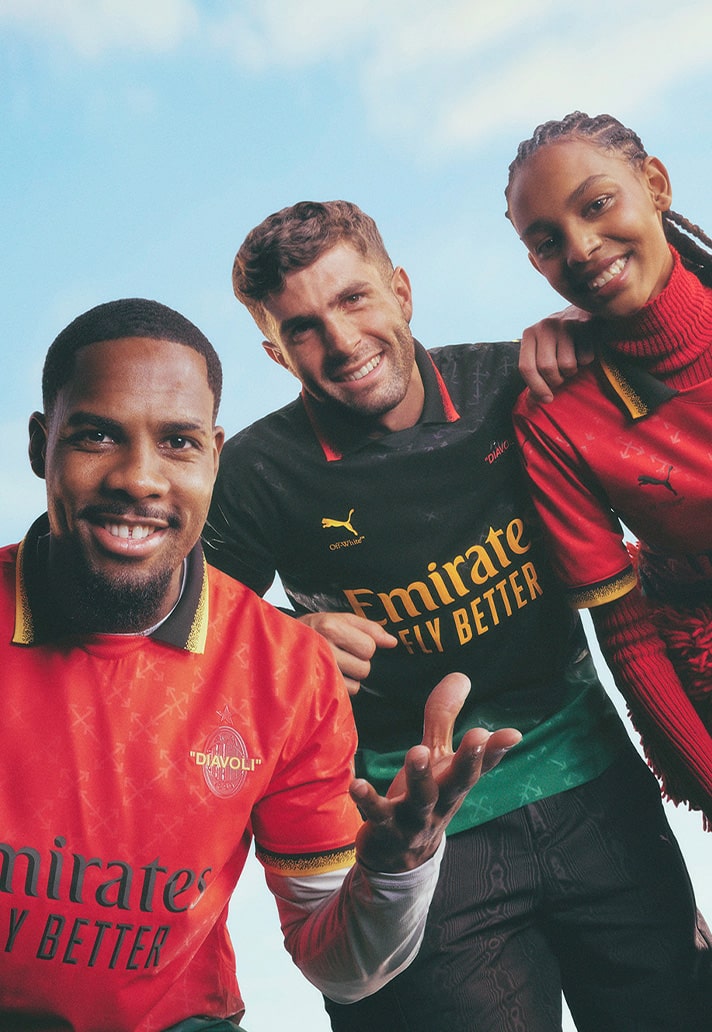
The anniversary kit explosion cannot be separated from broader cultural trends. Football has embraced streetwear's drop culture, where frequent, limited releases create perpetual urgency. Supreme taught brands that scarcity generates demand; football clubs have learned the lesson.
Social media accelerates these cycles. Kit launches are now events with cinematic films. The content ecosystem demands constant novelty. A club that releases three kits per season generates three major marketing moments; release six and double your content calendar. In an attention economy, more releases mean more visibility.
The Future - More Anniversary Kits
It remains to be seen how many anniversary designs we will see in future, but all signs point to there being more and more of them. Will oversaturation be reached in the football kit market? Certainly. Many fans can recall kits from the 1990s more vividly than designs released less than a decade ago, underscoring how oversaturation erodes memorability.
So, as of today, the Football Kit Archive almost features 430,000 shirts (also including non-match attire). We would not be surprised to reach one million before 2030.