GUINEA-BISSAU
45 YEARS AGO: THE NATIONAL TEAM'S DEBUT
June 8, 1975, will go down in Guinea-Bissau football history. On... that distant day, at the Lino Correia Stadium, the national team made its international football debut. The country's capital hosted the 1st edition of the Amílcar Cabral Cup, established by the Higher Council for African Sports, with the participation of the teams that were part of Sports Development Zone No. 2: Guinea-Bissau, Guinea-Conakry, Gambia, Mali, and Senegal.
Avito da Silva, then President of the Guinea-Bissau Football Association, exuded confidence: everything was ready, the country's residents were euphoric (the organization had garnered significant support from the country's population, who had voluntarily contributed approximately four hundred and fifty thousand escudos), and the logistics were in place. The teams began arriving on the 6th and stayed in Santa Luzia. They would be joined by the host team from Guinea-Bissau after a training camp in Bissalanca, led by the first-ever national coach, Mário Aureliano, who had called up the following players: Goalkeepers – Quinzinho (Sporting Bissau) and Maio; Defenders – Agostinho (Benfica Bissau), Sani (Benfica Bissau), Armando, Zeca (Sporting Bissau), and Mário Sambú Coró (Balantas); Midfielders – Cirilo (UDIB), Nicolau, António Jorge (Sporting Bissau), Abraão, and Niná (Ajuda Sport); Forwards – Domingo Cá (UDIB), Rufino (UDIB), Carlitos (Balantas), Silá (Balantas), Mariano (Bolama), and Cuca (Sporting Bafatá).
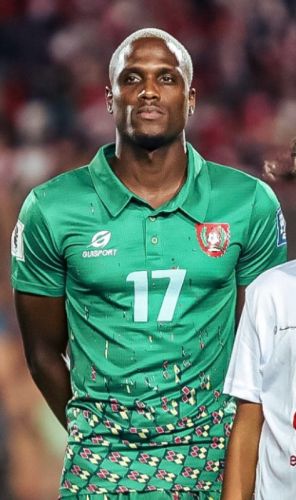
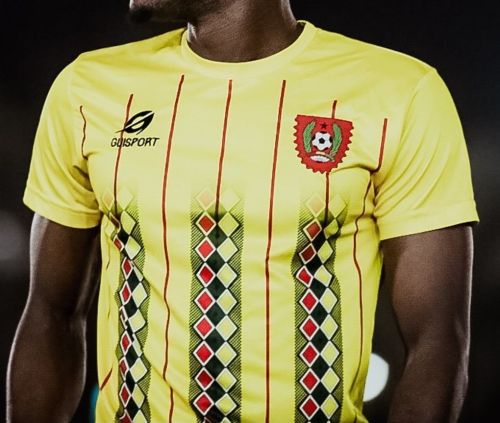
The Guinea-Bissau national team, representing our country internationally for the first time, debuted in the competition wearing a green jersey with red, black, and yellow central stripes, red shorts, and green socks with black piping.
On the eve of the 7th, tickets for the competition were on sale at the Lino Correia Stadium box office, as well as at some hotels and tobacconists in the city. Ticket prices for the games were as follows: Side Stand - R$70.00, Supplementary Stand - R$50, and Peão - R$25. Tickets could also be purchased in eight-ticket sets at the following prices: Side Stand - R$500, Supplementary Stand - R$340, and Peão - R$160.
On Sunday, June 8, at 4:30 p.m., the opening ceremony began in the presence of Party and State leaders, the diplomatic corps, and foreign guests accompanying the visiting teams. It included a parade, speeches, and a band performance. Thousands of people packed the Lino Correia Stadium to watch the ceremony that Sunday afternoon, including Francisco Mendes, a member of the Permanent Secretariat of the C.E.L. of the Party and Chief State Commissioner, Nino Vieira, member of the Permanent Secretariat and Commissioner of the Armed Forces, Umarú Djaló, member of the C.E.L. and Chief of Staff of the F.A.R.P., and other Party and State leaders. In the stands, Ana Maria Cabral, who, along with Chico Té, greeted the players, kicked off the opening match at 5:45 p.m.
This opening match pitted the national teams of Guinea-Bissau against Gambia. As previously established in the Regulations, there was a minute of silence in memory of Amílcar Cabral, founder of the nation, and all the athletes who, in the struggle for liberation, faced death.
In the blazing heat, referee Mamadou Diarra, a FIFA-registered Malian international, assisted by two linesmen, Abdoulaye Sylla of Guinea-Conakry and Alage M'noob of Gambia, finally blew the whistle for the start of the match, after the customary photograph with the two captains: Rufino and Sehu Sarr. The teams presented the following lineups: GUINEA-BISSAU: Quinzinho (Sporting); Agostinho (Benfica), Sani (Benfica), Zeca (Sporting) and Mário Sambú (Balantas); Niná (Ajuda Sport), Cirilo (UDIB) and António Jorge (Sporting); Domingos Cá (UDIB), Rufino (UDIB) and Silá (Balantas). GAMBIA: Jim Wada; Emanuel Conté, Mamadou Siré, Mustafá Contê and Saloum N'Djai; Sehu Sarr James King and Biri; Vitor Gabidon, Tony Djoina, and Ibraima Fai.
In the first half, the Gambians showed slight individual technical superiority, dressed all in white, with a particular focus on their striker Tony Djoina, who always posed a threat when he controlled the ball. Meanwhile, the Guinea-Bissau team had midfielder Cirilo as the most dedicated player, closely followed by Zeca and Sani. Quinzinho was untroubled, unlike Gambia's Jim Wada, who proved to be a good goalkeeper, especially between the posts. The biggest disappointment, however, was Gambia's Biri, a player considered a star, who had previously played for Sevilla in Spain, and who was completely sidelined.
With two substitutions made, one for each side – Mariano for Domingos Cá (35') and James King for Jim Bittei (30') – the first half ended in a goalless draw.
The game's complexion changed completely in the second half, with temperatures now milder and Nicolau replacing Niná. The less nervous Guinean players made easy prey for their opponents, forcing them back in the first thirty minutes.
The Gambian team saw two more substitutions—Jim Bittei for Cabá Djaló (64') and Emanuel Conté for Babucar Sou (73')—but in the 83rd minute, the first and only goal of the match would come, cleverly scored by Mariano, who lobbed goalkeeper Jim Wada as he left the post to close the shot. This paved the way for a more impressive result, given our team's superiority, which, however, failed to materialize: Rufino twice lacked the composure and determination to increase the score.
Thus, our team's opening match ended with a narrow 1-0, with a strong performance from the refereeing team, who had no problems with the players' corrections. Goal: GB.
Editorial Staff

 Guinea Bissau