Is Red Bull Finally Learning That Football Clubs Need More Than Corporate Colors?
In the global landscape of football, few stories are as polarizing as Red Bull's systematic acquisition and rebranding of clubs across continents. What began in 2005 with the purchase of SV Austria Salzburg has evolved into a multi-club empire that operates more like a corporate franchise than a football team. The kits tell the story better than any press release ever could.
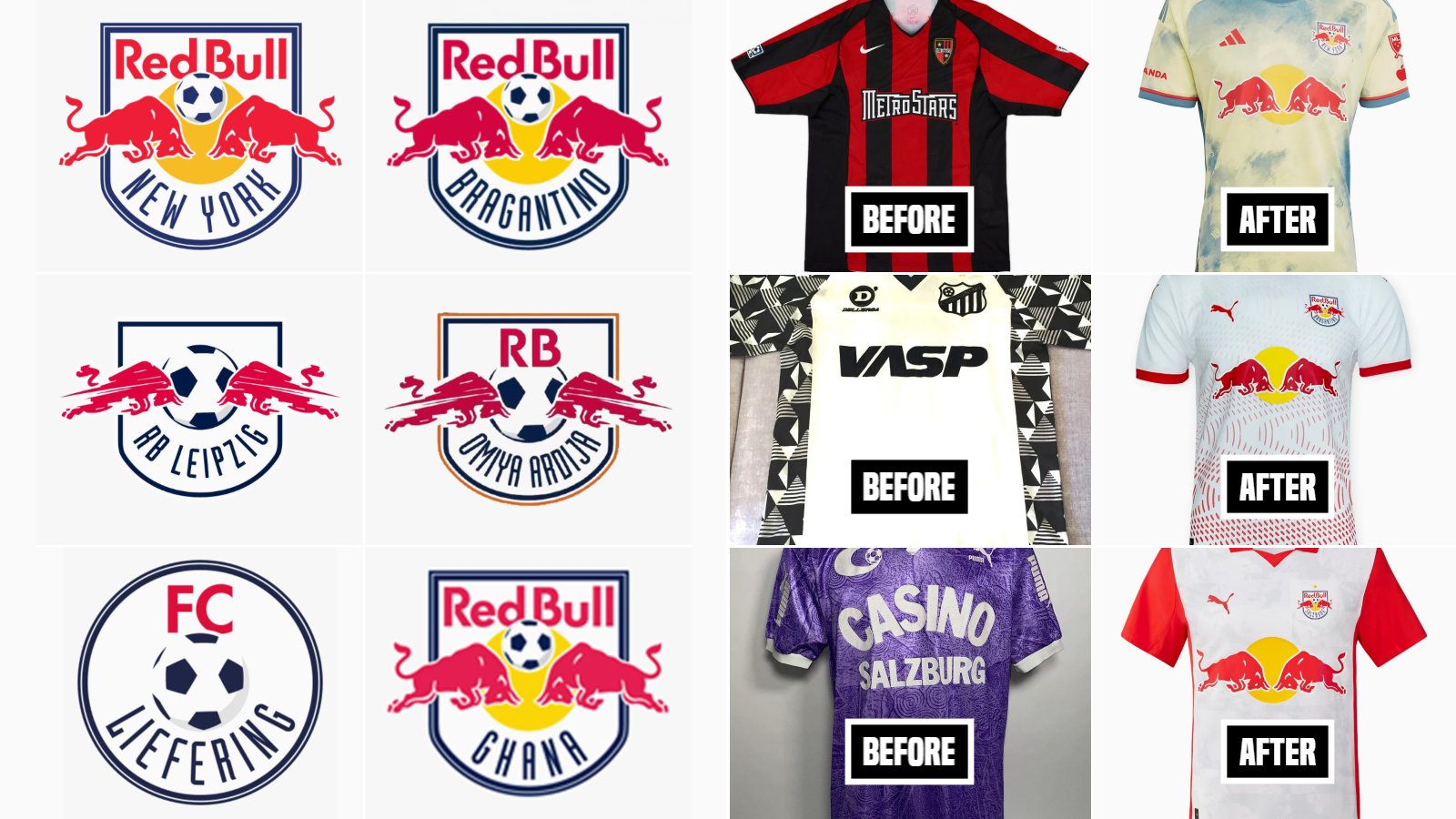
The Template: Salzburg's Transformation
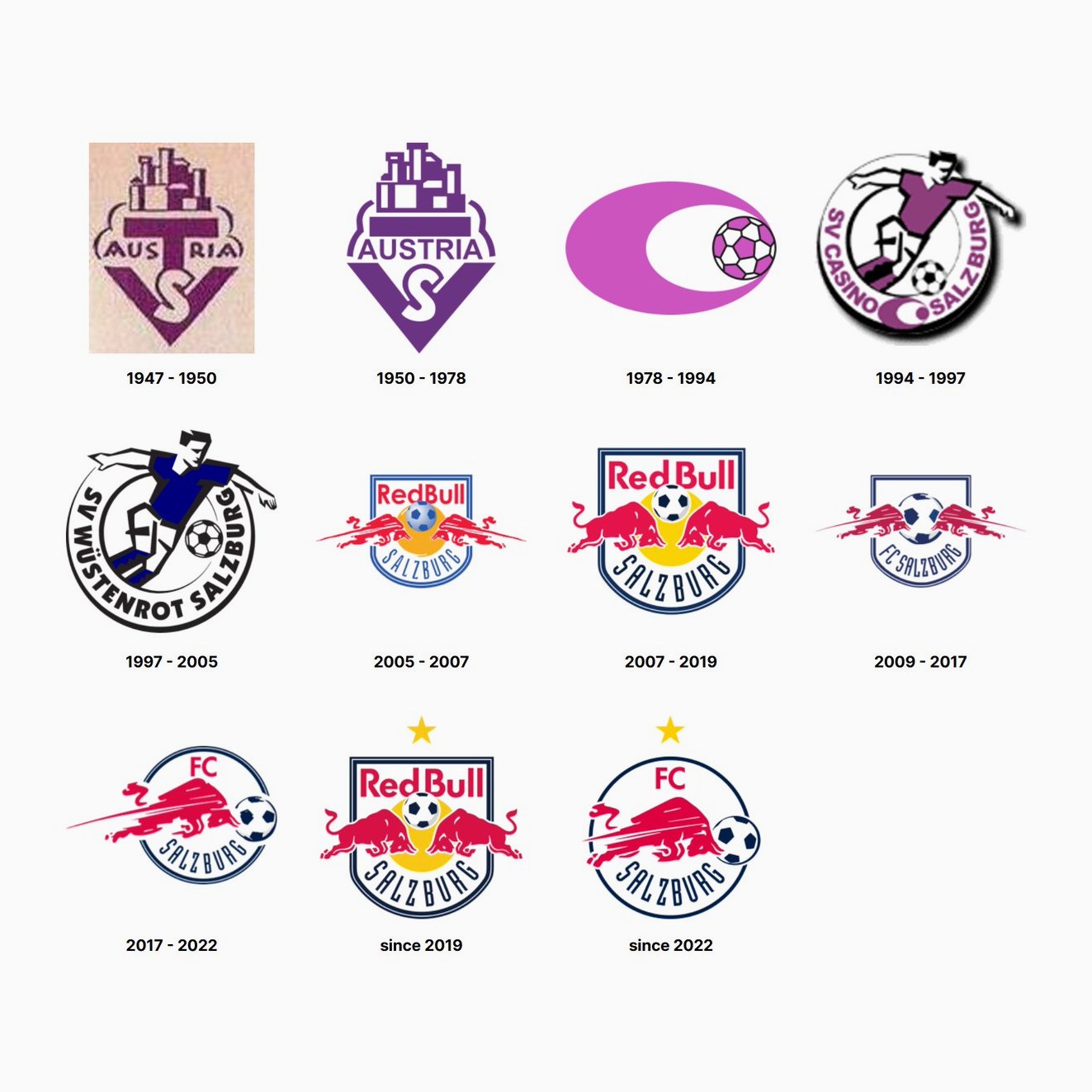
The blueprint was established in Austria. When Red Bull purchased SV Austria Salzburg in 2005, they erased the club. The name changed to FC Red Bull Salzburg. The traditional purple color scheme, worn since 1933, was replaced with Red Bull's corporate red and white. The charging bulls logo supplanted decades of local insignia.
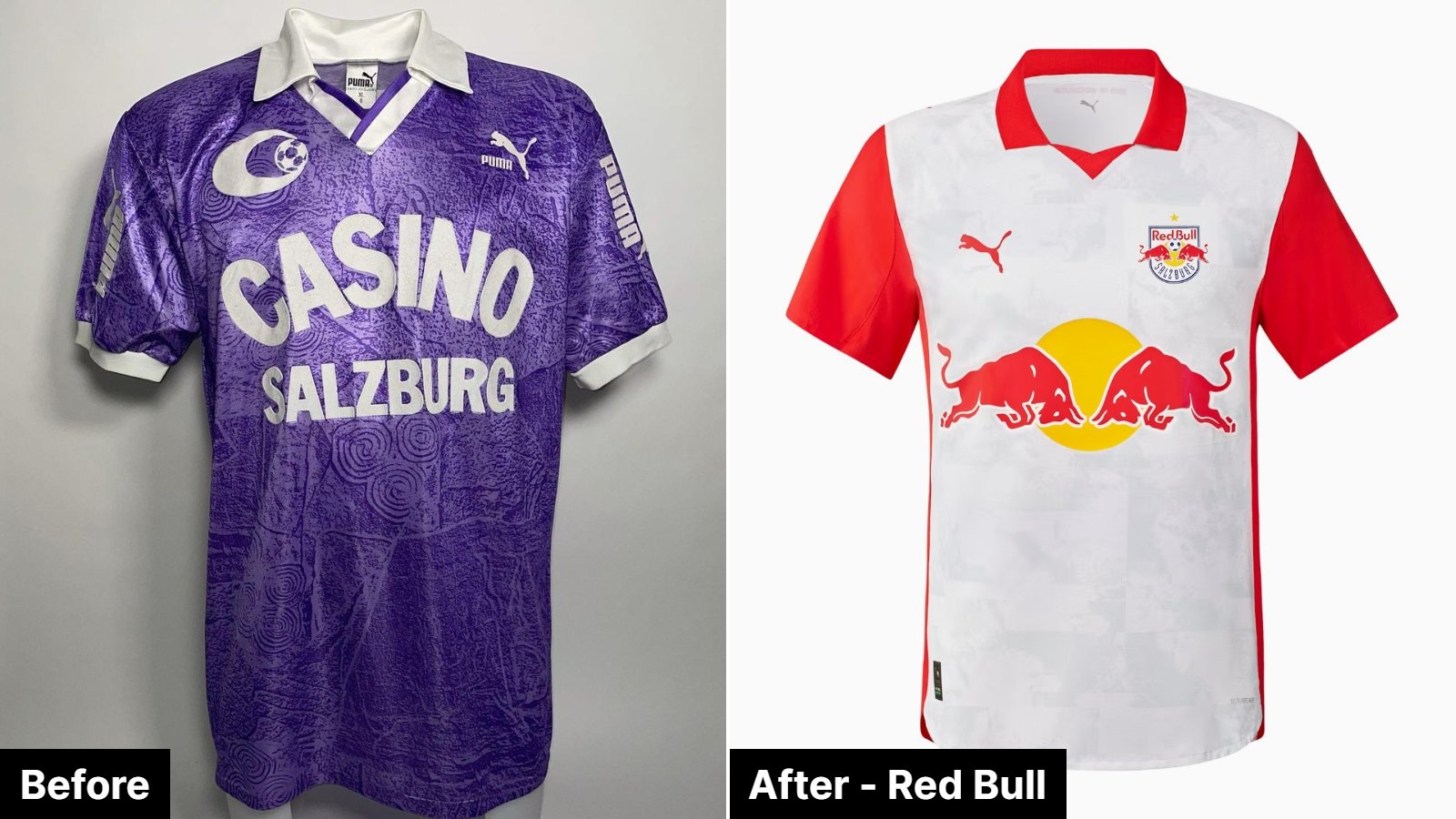
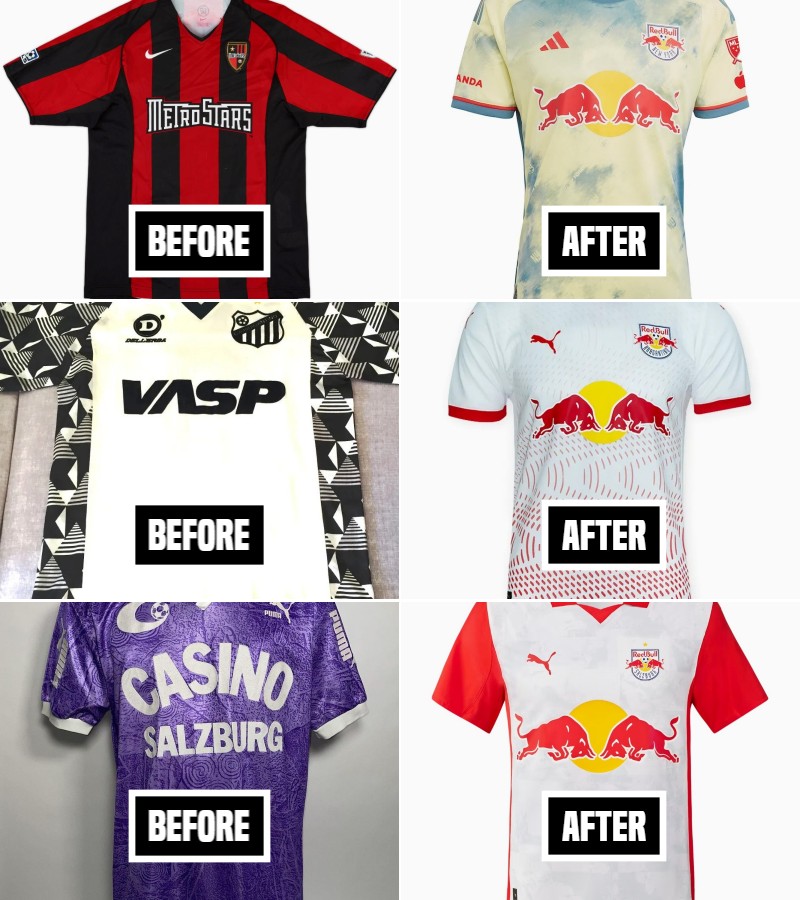
Red Bull, of course, did not stop with the team's name and colors - the change became also obvious with the kits. That striking purple 1990s-era Puma kit with "Casino Salzburg" sponsorship represented a club with its own identity, its own aesthetic choices. The modern Red Bull Salzburg kit? It could be from New York, Leipzig, or Brazil. The template is the point.
Bragantino: Erasing 92 Years of History
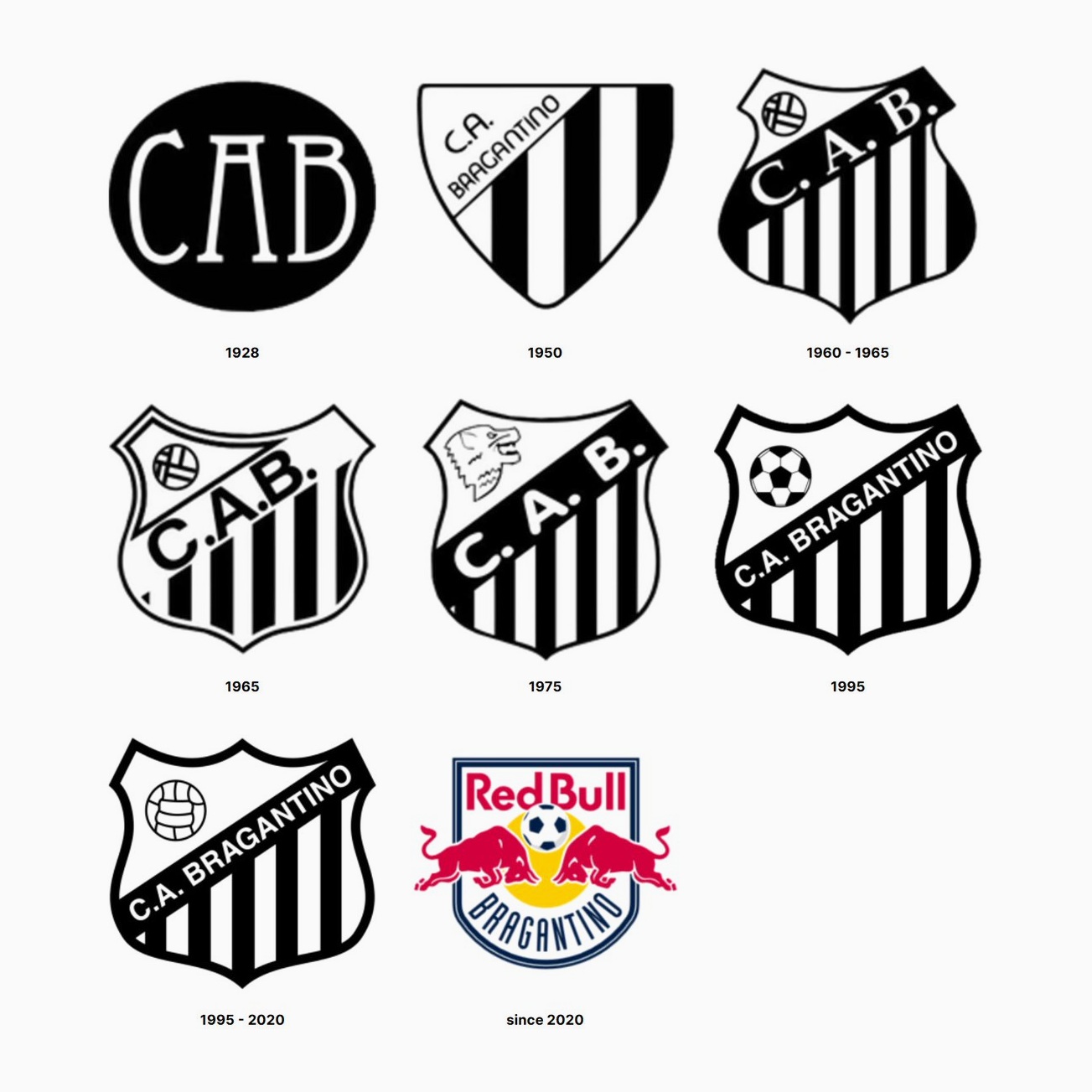
Perhaps no takeover illustrates Red Bull's approach more starkly than Clube Atlético Bragantino. Founded in 1928 in Bragança Paulista, Brazil, this club carried nearly a century of history in its black and white. The badge evolution shows a club that valued its identity: the simple "CAB" circle from 1928, the distinctive shield with stripes emerging by 1950, the addition of a lion mascot in 1975, and various refinements that maintained core elements through 1995-2020.
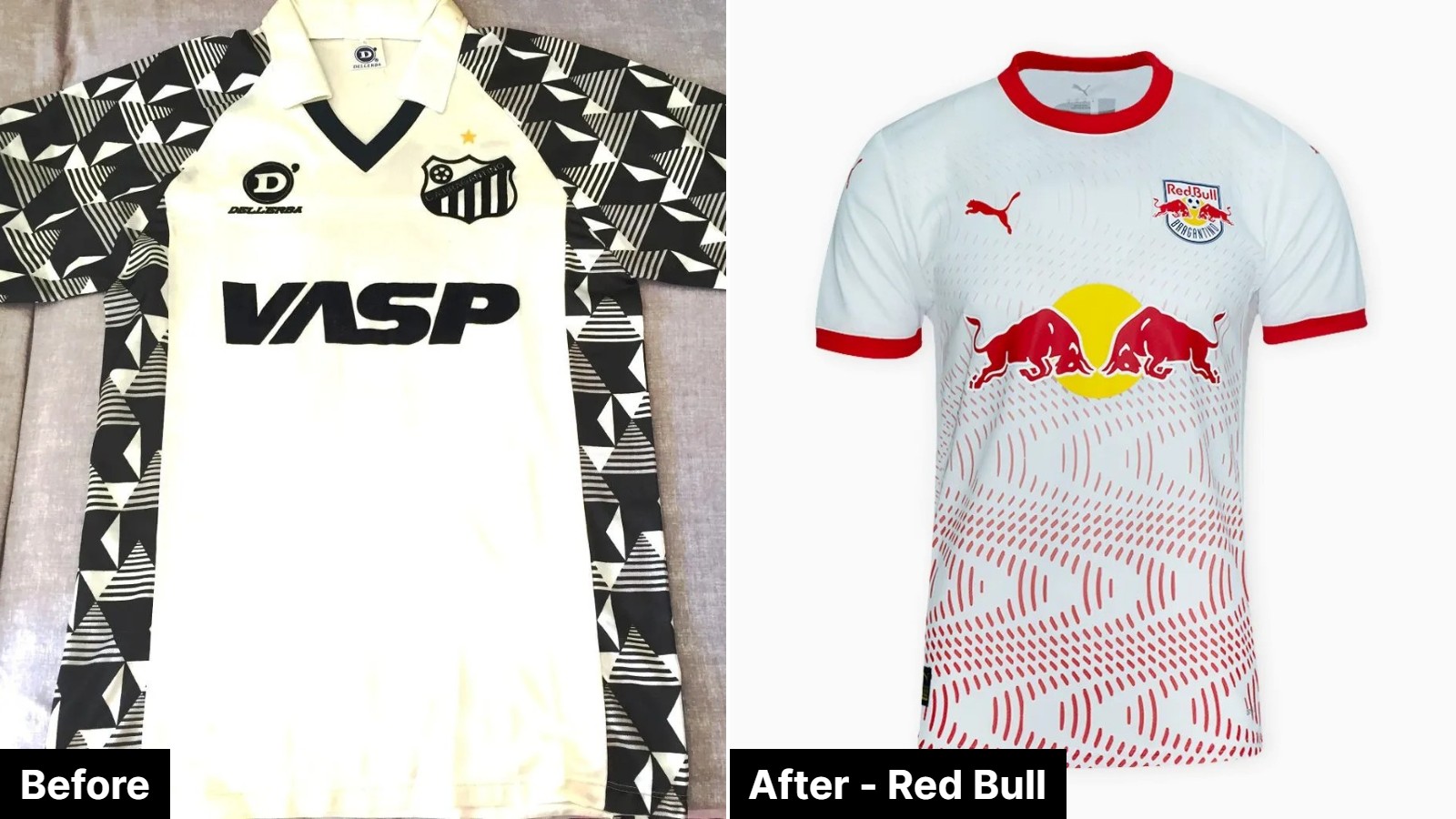
Then, in 2020, Red Bull acquired the club. The transformation was immediate and total. Out went the black and white stripes that had defined the club since before World War II. In came the Red Bull template: the charging bulls, the yellow sun, the corporate red. The "Before" images show clubs with character -a 1990s kit with bold geometric patterns on the sleeves, distinctive "VASP" sponsorship. The "After" is corporate uniformity.
The Global Network: All Clubs, One Identity
Red Bull Ghana has been erased.
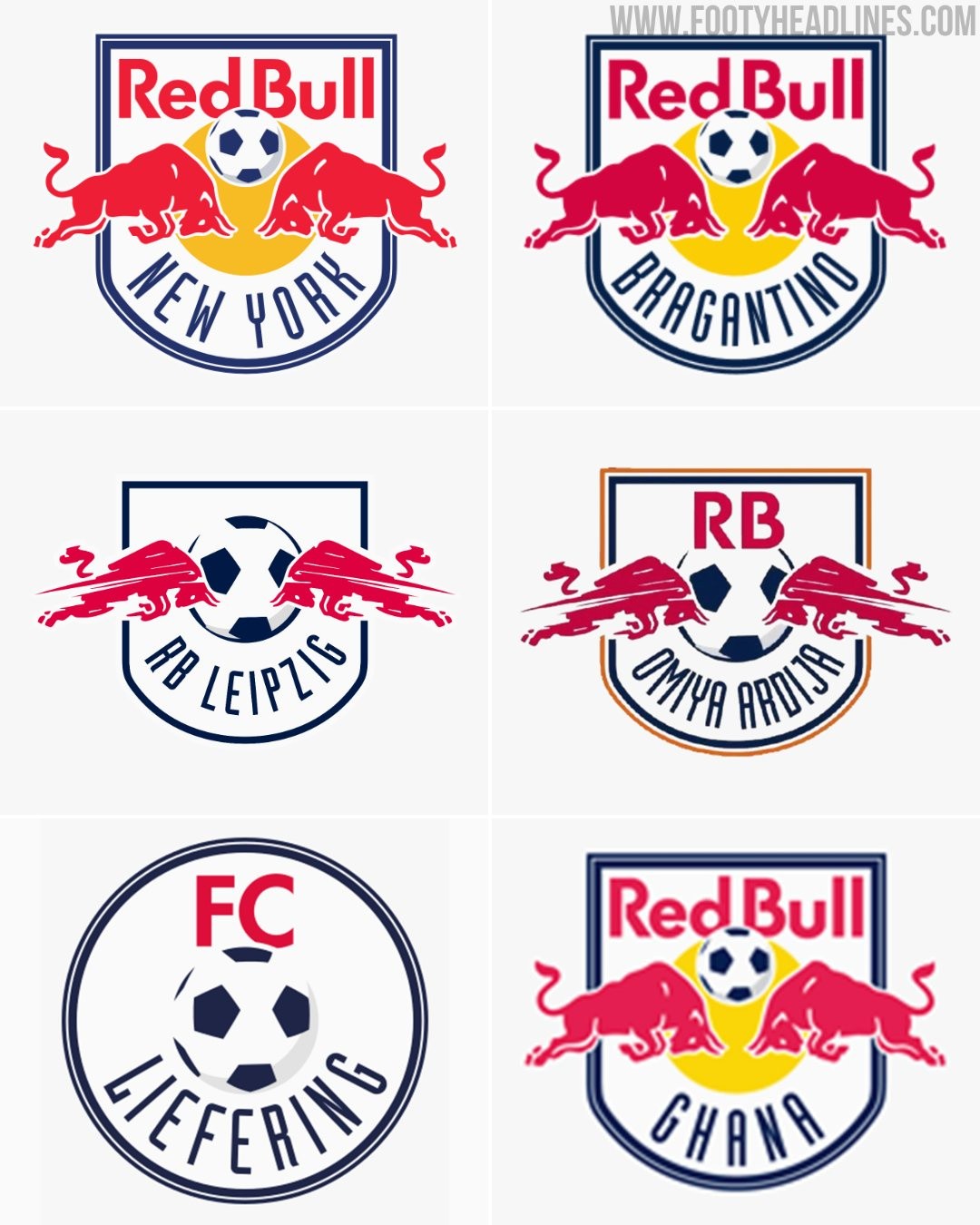
Red Bull now operates teams across three continents:
FC Red Bull Salzburg (Austria) - The original and flagship, competing in the UEFA Champions League
RB Leipzig (Germany) - The most successful sporting project, now a Bundesliga powerhouse
New York Red Bulls (USA) - Formerly the MetroStars, rebranded in 2006
Red Bull Bragantino (Brazil) - The most controversial rebrand, erasing 92 years of identity
RB Omiya Ardija (Japan) - The newest addition, with hints of a different approach
The Kit as Cultural Document
Football kits are historical documents. They reflect eras, sponsors, manufacturing trends, and local aesthetics. When you see AC Milan's red and black stripes or Barcelona's blaugrana, you're seeing continuity stretching back over a century. The kit connects modern fans to their grandfathers' memories.
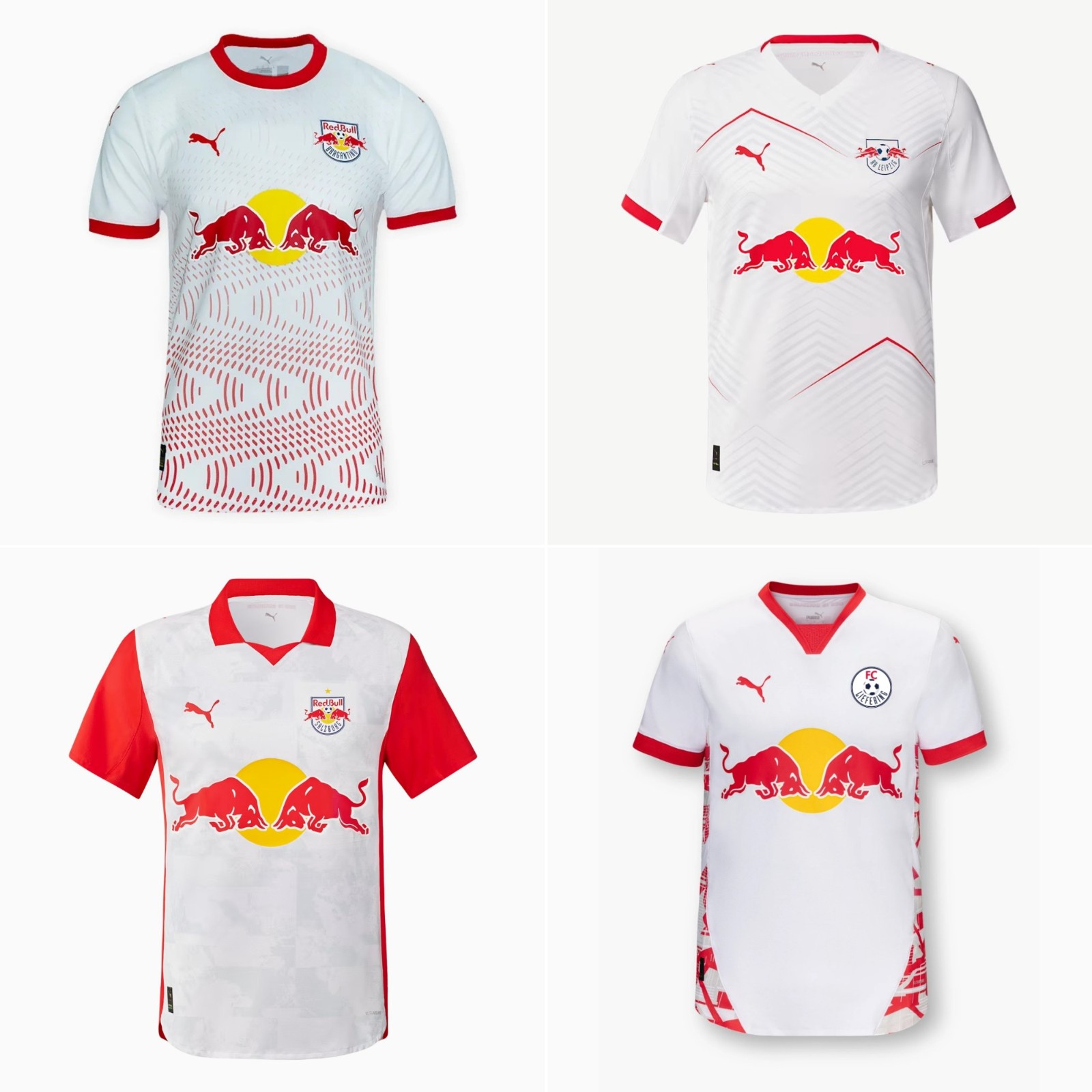
Red Bull's kits deliberately sever that connection. They're not designed to honor local tradition or create visual continuity with the past. They're designed to sell an energy drink. The charging bulls logo must be prominent. The red and white color scheme is non-negotiable.
The MetroStars-to-Red Bulls transformation in MLS exemplifies this. The MetroStars had their own identity - a red and black striped kit that evoked traditional football aesthetics. After Red Bull's purchase, that identity was replaced with corporate colors and branding that could just as easily appear on a (boring) Formula 1 car.
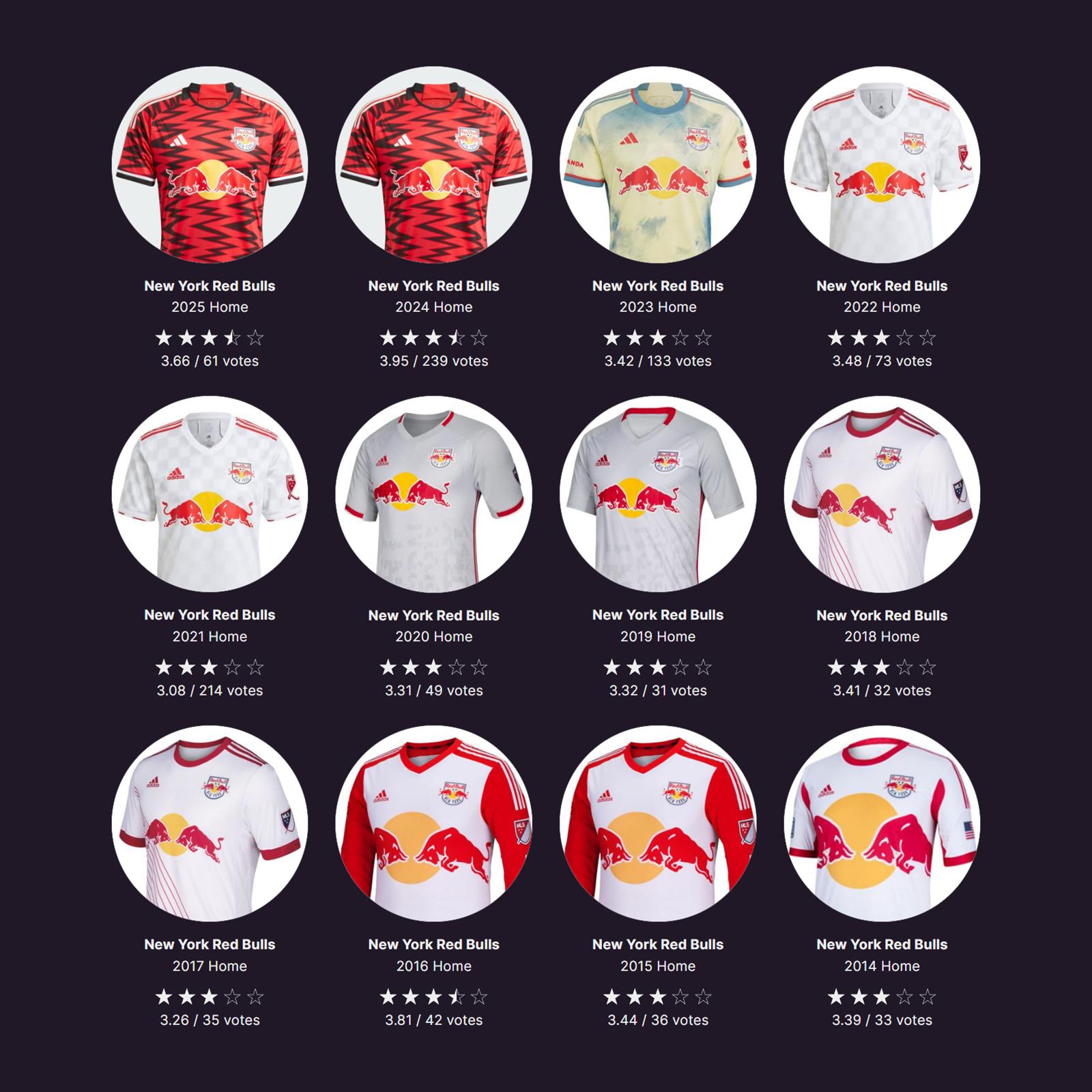
After Two Decades of Erasure, Red Bull Shows Signs of Respecting Football Heritage
Japanese team Omiya Ardija was allowed to keep their colors.
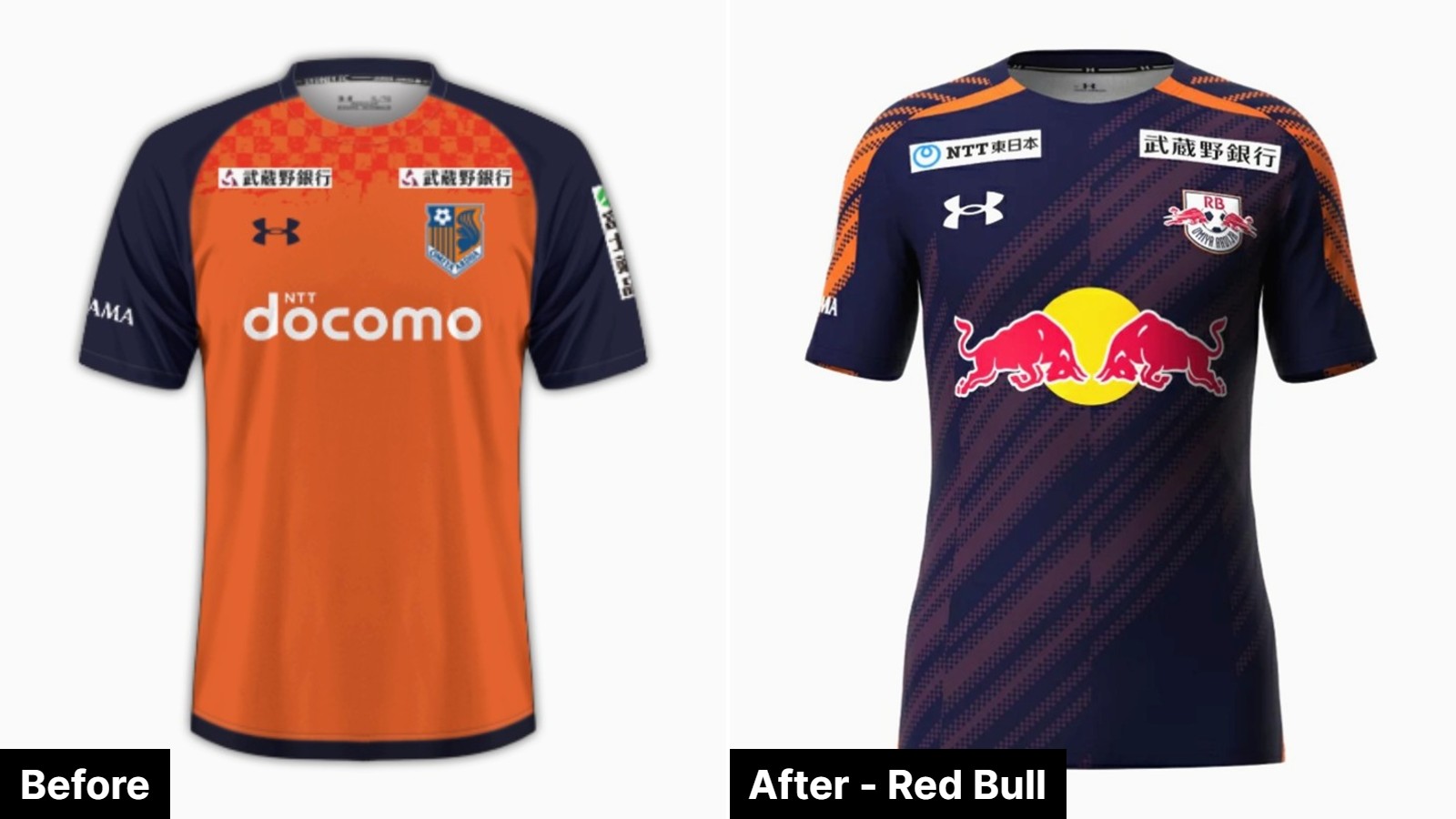
Recent developments suggest Red Bull may be calibrating its approach. The New York Red Bulls have released a black and red home kit - a nod to the MetroStars heritage. RB Omiya Ardija respects the club's original name and colors.
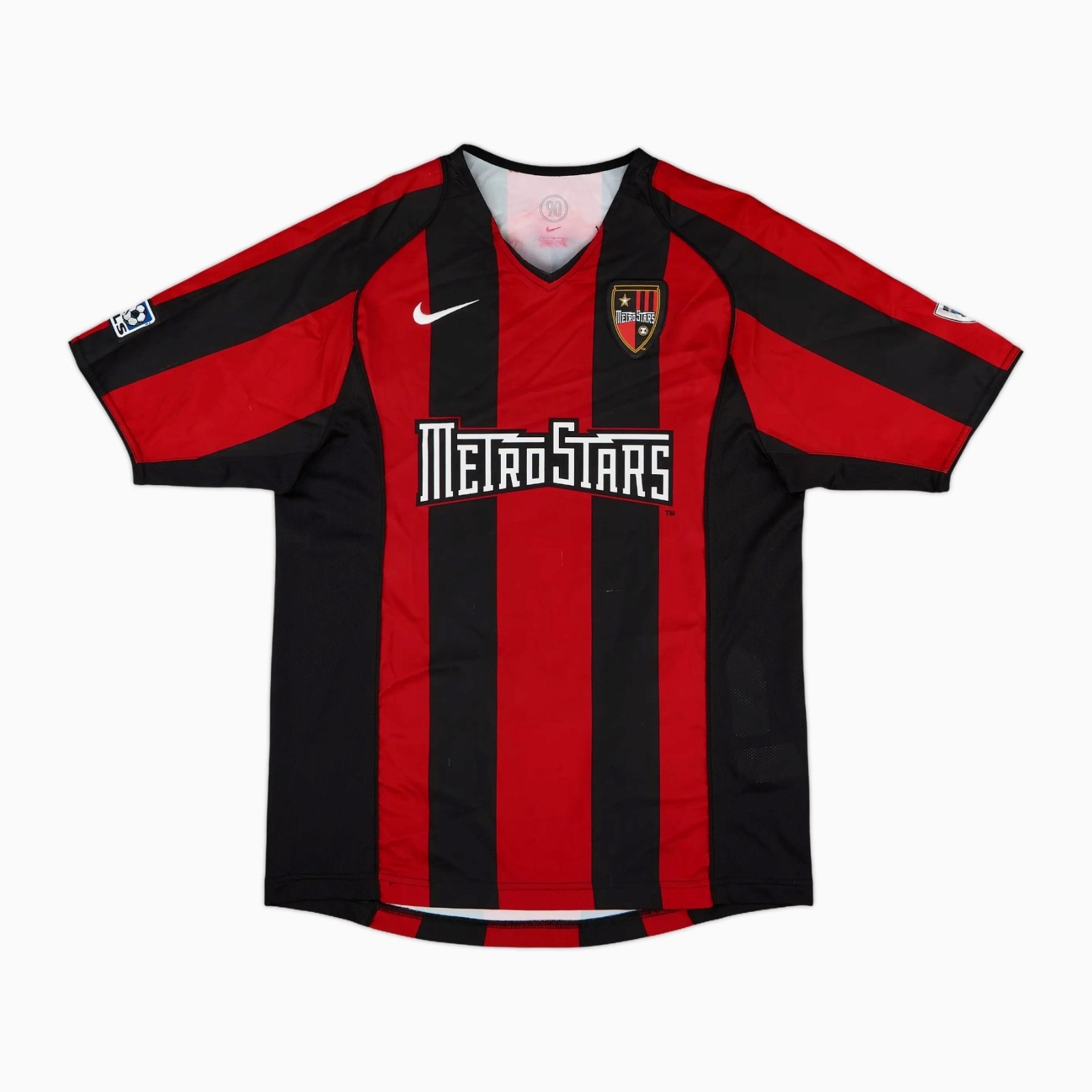
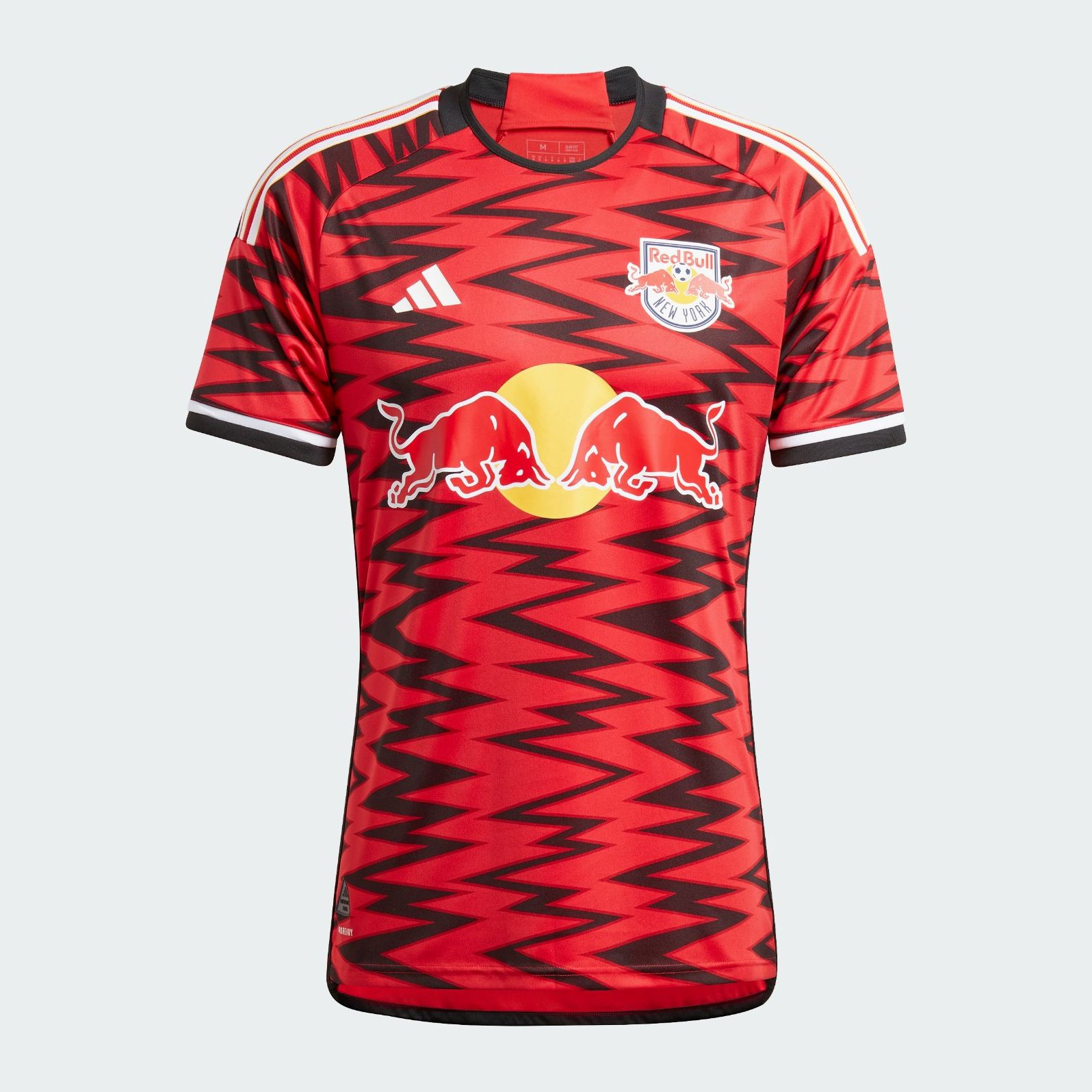
These variations raise the question: Is Red Bull learning that total brand homogenization alienates fans? The next few years will show.
The Kit Collection Paradox
For kit collectors and historians, Red Bull presents a paradox. The pre-takeover kits become instantly more valuable and historically significant - they're the last remnants of erased identities.
Meanwhile, is there really anyone out there happy to get a home kit in that typical Red Bull colors, white and red? The Leipzig kit from 2016 looks similar to the Salzburg kit from 2019 looks similar to the New York kit from 2022 - they lack soul.